Skip to content

Postural Correction in Kingston Springs, Tennessee

When limited flexibility needs adjustment, postural correction in Kingston Springs starts with a focused assessment. We match care to movement limits, daily habits, and recovery goals.

Upfront, Transparent PricingServing 18 CommunitiesMon-Fri: 9 am–7 pm, Sat: 9 am–2 pm, Sun: ClosedFast Scheduling

Quick Summary: Postural Correction in Kingston Springs, Tennessee

Postural Correction in Kingston Springs is provided by Advanced Injury Care Clinic for people who need help with posture, movement limits, and related discomfort. Care includes an exam, personalized treatment planning, chiropractic adjustments, and therapeutic exercises for clients across the surrounding area.

  • What we do: Advanced Injury Care Clinic provides Postural Correction for clients in Kingston Springs, Tennessee through assessment, chiropractic care, and therapeutic exercise.
  • What is included: posture assessment, movement review, chiropractic adjustments, therapeutic exercises, and personalized treatment planning.
  • What you get: Postural Correction helps clients identify barriers to better movement and follow a care plan suited to their needs.

Why does limited flexibility interfere with postural correction in Kingston Springs, Tennessee?

Limited flexibility can restrict movement during posture work and make poor patterns harder to change. An assessment helps identify which joints, muscles, habits, or symptoms need attention first.

Postural Correction for Limited Flexibility in Kingston Springs

Postural correction focuses on how your spine, joints, muscles, and daily movements work together. For clients in Kingston Springs, the key decision is whether limited flexibility is the main barrier or one part of a wider problem.

Our team reviews posture, range of motion, pain areas, work habits, and activity demands. Sedentary habits and poor ergonomics can place the same tissues under stress each day, while muscle weakness may make a new posture hard to hold.

The service has limits. Severe or unexplained symptoms may need medical assessment before posture-focused care begins. We explain those concerns during the exam and outline the next step that fits your needs.

  • Review limited flexibility and range of motion.
  • Check posture during simple movements.
  • Discuss work, rest, and activity habits.
  • Identify muscle weakness that affects posture.
  • Choose between adjustments, exercises, or combined care.
  • Set a follow-up point to review progress.
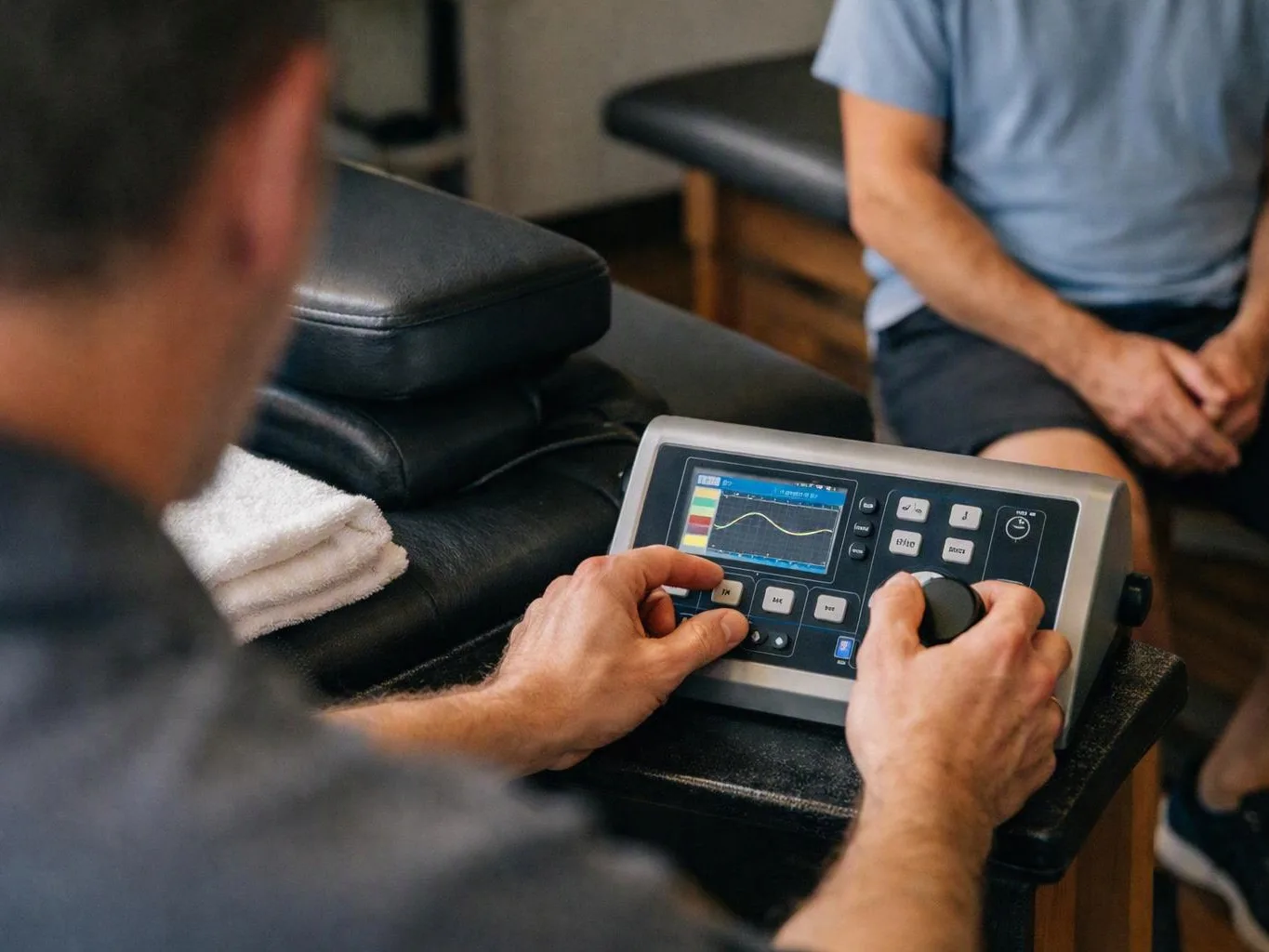
A person adjusts a therapy machine on a padded table while another sits nearby in a clinic room

Service Overview

Postural correction is a care process that addresses posture, movement patterns, flexibility, and muscle support.

  • Unlike massage therapy alone, postural correction may combine chiropractic adjustments with therapeutic exercises and daily habit changes.
  • Advanced Injury Care Clinic provides this care for clients in Kingston Springs and the surrounding area.

What Better Posture Support Can Change

Improved movement awareness can help you notice habits that strain your body.

Therapeutic exercises give you active steps to support mobility between visits.

Addressing weak muscle support may make healthy posture easier to maintain.

Ergonomic guidance can help reduce repeated strain during work or seated tasks.

Regular maintenance may support continued movement after an initial care plan.

What Your Posture Care Includes

Advanced Injury Care Clinic provides comprehensive Postural Correction in Kingston Springs. Here's what you get:

  • A new patient intake covers health history, symptoms, and daily activities.
  • A health history and exam review posture, movement, and areas of discomfort.
  • Chiropractic adjustments may address restricted joint motion when clinically appropriate.
  • Therapeutic exercises support muscle control, mobility, and better movement habits.
  • Our team explains how ergonomics and regular practice affect your care plan.
  • A progress re-examination helps guide the next stage of treatment.
Process

How We Plan and Deliver Posture Care

1

Review your history and goals

The new patient intake covers symptoms, injuries, activities, work habits, and what you want to change.

2

Assess posture and movement

We check range of motion, joint function, muscle support, and movements that bring on discomfort.

3

Explain the care options

The report of findings connects the exam to possible adjustments, therapeutic exercises, soft tissue therapy, or other non-invasive care.

4

Build a personalized treatment plan

We set practical care steps around your needs, comfort, and ability to practice between appointments.

5

Review progress and next steps

A progress re-examination helps us decide whether to continue, adjust, or end posture-focused care.

The scope this service is meant to handle

A typical client may sit for long periods, notice stiffness when standing, and struggle to keep a new posture during daily tasks. We check flexibility, joint motion, muscle support, and work habits before setting the care plan. The client then receives suitable treatment options and practice guidance, not a posture goal based on appearance alone.

Why Clients Choose This Posture Care

A plan based on movement limits

Limited flexibility can change which movements feel safe and useful. We assess that limit before choosing adjustments or exercises, so the plan matches your current ability.

Care that joins hands-on and active work

Chiropractic adjustments address joint motion, while therapeutic exercises help you build control. Customers receive guidance on how both parts fit their daily routine.

A clear boundary for treatment

Postural correction isn't the right first step for every symptom. Severe, new, or unexplained symptoms may call for medical assessment before posture-focused care.

The Advanced Injury Care Clinic Standard

  • Thorough Assessments
  • Tailored Care Plans
  • Clear Explanations
  • Appropriate Techniques

Questions About Posture-Focused Care

What can interfere with postural correction progress?

Limited flexibility, sedentary habits, poor ergonomics, muscle weakness, and inconsistent practice can interfere with progress. We check these factors during the exam and connect them to your treatment plan. Clients should mention work demands, exercise habits, and symptoms that return during the day. That detail helps us choose realistic exercises and care steps.

How is postural correction matched to my needs before care starts?

A health history and movement exam match posture care to your symptoms, flexibility, joint motion, and muscle support. We review daily activities and injury history before discussing adjustments or exercises. X-rays are considered only if clinically indicated. The findings guide the report of findings and personalized treatment plan.

What should be ready before postural correction starts?

Your symptom history, injury details, daily activity pattern, and treatment goals should be ready before care starts. Clients should also share work habits and movements that increase discomfort. Our new patient intake gathers this information, then the exam checks posture and movement before treatment options are discussed.

What should I ask before agreeing to postural correction?

Ask which finding the treatment addresses, what active practice you will need, and how progress will be reviewed. Our team explains the purpose of each recommended adjustment, exercise, or added therapy. You can also ask which symptoms fall outside posture-focused care and need another medical assessment.

Which daily habits can make posture work harder?

Sedentary habits, poor ergonomics, and inconsistent practice can make posture work harder. Long seated tasks may limit movement, while weak muscles can make a new position difficult to hold. We discuss your routine and suggest care steps that fit your work and activity demands.

When is postural correction the wrong first step?

Postural correction is the wrong first step when severe or unexplained symptoms need medical assessment first. Our team reviews warning signs, injury history, and movement limits during the intake. Clients receive guidance on whether posture-focused care fits or whether another evaluation should come first.

Why might exercises be part of chiropractic posture care?

Therapeutic exercises help build the muscle control needed to support changes between visits. Adjustments may address joint motion, but active practice helps you use that motion during daily tasks. We choose exercises based on your exam, comfort, flexibility, and ability to perform them safely.
Contact

Discuss Postural Correction in Kingston Springs

Advanced Injury Care Clinic offers free consultations for clients who want to discuss limited flexibility, posture concerns, or movement goals. After you reach out, we'll review your concerns, arrange the consultation, and explain suitable next steps.

A person studies a spine X-ray on a clipboard in a clinic room

ZIP Codes We Serve in Kingston Springs, Tennessee

37082

The health and wellness information on this website is for general informational purposes only and is not medical advice. It does not create a provider-patient relationship. Always consult a qualified licensed provider in Brentwood, Tennessee, United States about your specific condition before making care decisions. Individual results vary.

(615) 265-0412