Skip to content

Physical Therapy in Forest Hills, Tennessee

Balance problems can lead to falls and lost confidence in Forest Hills. Our physical therapy plans address movement limits through assessment, exercise, and hands-on care.

Upfront, Transparent PricingServing 18 CommunitiesMon-Fri: 9 am–7 pm, Sat: 9 am–2 pm, Sun: ClosedFast Scheduling

Quick Summary: Physical Therapy in Forest Hills, Tennessee

Physical Therapy for Forest Hills is provided by Advanced Injury Care Clinic for balance problems, joint pain, muscle weakness, and postoperative recovery. Care includes an evaluation, therapeutic exercises, and a personalized treatment plan for Brentwood, Williamson County, and the greater Nashville area.

  • What we do: Advanced Injury Care Clinic provides physical therapy for Forest Hills, Tennessee, with care focused on movement, strength, balance, and recovery.
  • What is included: Key capabilities include health history review, movement assessment, therapeutic exercises, soft tissue therapy, and progress checks.
  • What you get: Patients receive a clear treatment plan that supports safer movement and daily function.

What conditions can physical therapy treat?

Physical therapy treats balance problems, joint pain, muscle weakness, postoperative recovery needs, back pain, neck pain, sciatica, whiplash, and soft-tissue injuries. Treatment starts with an assessment of movement, strength, joint motion, and symptoms. The plan then uses exercises and hands-on methods that match the patient’s needs.

Physical Therapy for Balance and Recovery in Forest Hills

Physical therapy helps people who have trouble walking, rising from a chair, using a joint, or returning to normal activity. Our work begins with a health history and exam, then connects the findings to a practical treatment plan.

Customers comparing care should ask what the visit will assess and how progress will be checked. We look at joint motion, muscle control, walking patterns, pain, and activity limits. A progress re-examination helps show whether the plan still fits the patient’s needs.

This service fits injury recovery, postoperative needs, sports injuries, workplace injuries, auto accident injuries, and ongoing discomfort. It may not be the right first step for a medical emergency or symptoms that need urgent hospital care. Results vary, and individual response differs.

  • Ask whether the assessment will review strength, joint motion, walking, and balance.
  • Bring details about the injury, surgery, pain pattern, and daily activity limits.
  • Discuss any treatment methods that may support your recovery.
  • Ask how progress will be checked during the care plan.
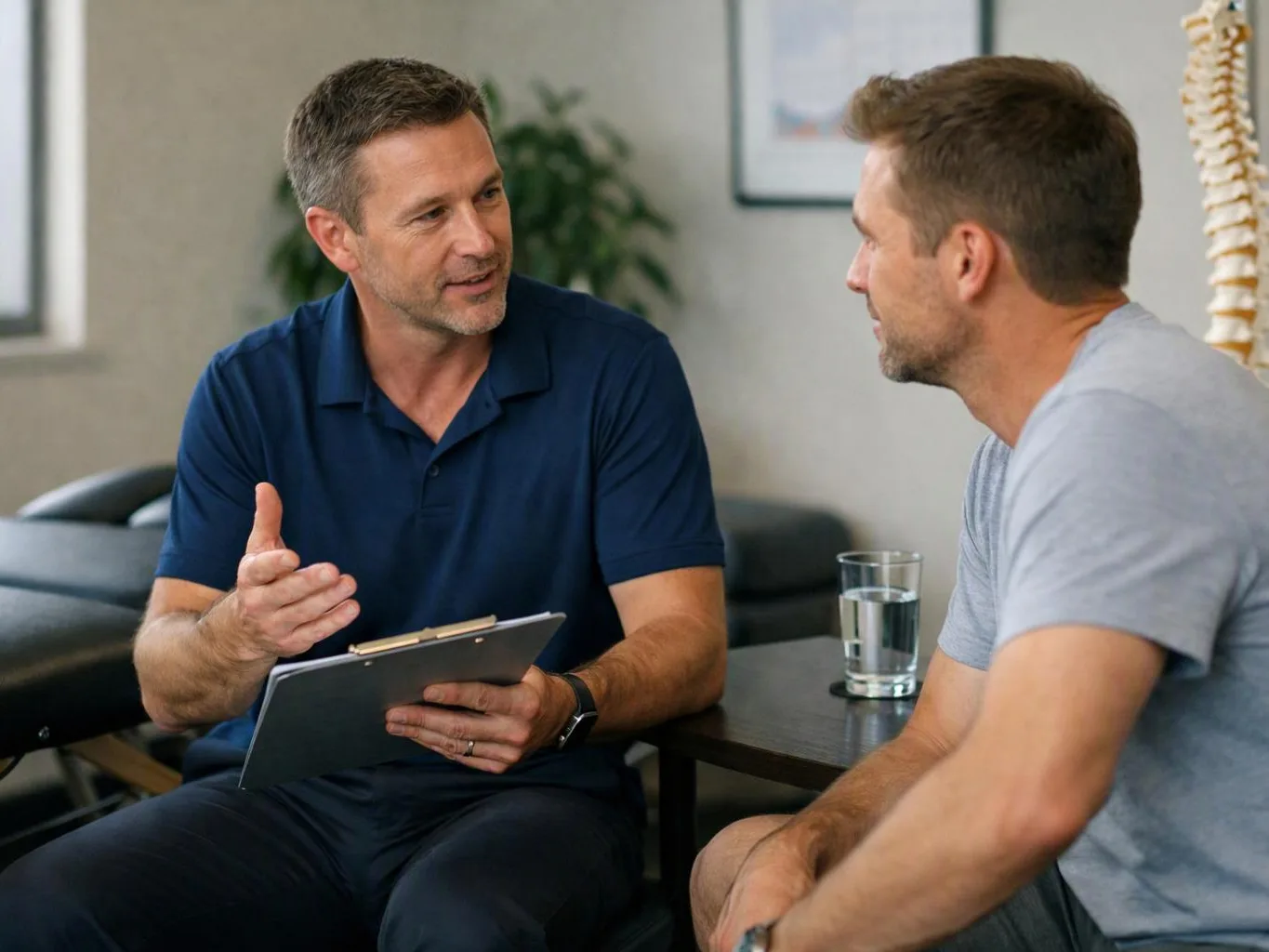
Two men sit in a clinic room, one speaking while holding a clipboard beside a glass of water

Service Overview

Physical therapy is a health service that improves movement, strength, balance, and daily function through assessment and guided treatment.

  • Physical therapy focuses on movement training and exercise, while chiropractic care may include adjustments and spinal decompression.
  • Advanced Injury Care Clinic provides physical therapy for Forest Hills and nearby communities across Williamson County and the greater Nashville area.

When this service is the right fit

A person recovering from surgery may still struggle with stairs, standing, or steady walking after the main procedure is complete. We check strength, joint motion, pain, and movement control, then set exercises that match those limits. The first step is a consultation and assessment, not a preset treatment routine.

What Patients Get From This Care

An exam tied to your symptoms

The first visit connects your symptoms to movement, strength, joint motion, and activity limits. This service is the wrong job for a medical emergency or symptoms that need hospital care first.

Treatment that fits the findings

Clients receive care plans shaped by the exam, not a fixed routine. Exercises, soft tissue therapy, and other non-invasive methods are selected for the person’s needs.

A clear way to track progress

Follow-up checks compare movement, strength, symptoms, and daily tasks with the earlier findings. The plan can then be continued, adjusted, or discussed with the patient.

Process

How We Provide Physical Therapy Care

1

Complete the new patient intake

We record your health history, symptoms, injury details, surgery history, and daily activity concerns.

2

Check movement and strength

Our team reviews joint motion, muscle strength, walking patterns, posture, pain, and movement control.

3

Set the treatment plan

We explain the findings and choose exercises, soft tissue therapy, and other non-invasive methods that fit your needs.

4

Practice the planned movements

Patients work through guided exercises and movement tasks that relate to their goals and current ability.

5

Review progress and adjust care

A progress re-examination checks the response to care and helps guide the next stage of treatment.

What Physical Therapy Includes for Your Recovery

Advanced Injury Care Clinic provides comprehensive Physical Therapy in Forest Hills. Here's what you get:

  • A new patient intake records your health history, symptoms, injury details, and activity goals.
  • A health history and exam checks strength, joint motion, posture, walking, and movement control.
  • Therapeutic exercises build strength, control, flexibility, and confidence with daily movement.
  • Soft tissue therapy addresses areas of tightness or tenderness when it fits the treatment plan.
  • A personalized treatment plan connects the exam findings to suitable exercises and care methods.
  • A progress re-examination checks changes in movement, strength, symptoms, and daily function.

What Physical Therapy Can Change

Guided exercises can help restore strength after injury, surgery, or reduced activity.

Movement training may help you handle stairs, walking, reaching, and other daily tasks with more control.

Joint-focused care can support range of motion when stiffness limits normal activity.

A planned progression gives you practical steps for building function without rushing the recovery process.

Regular maintenance may help some patients keep working on strength and movement after active treatment.

Choosing the Right Type of Care

These options address different needs, so the assessment should guide the choice.

Care optionMain focusWhen it may fit
Physical therapyStrength, movement, joint control, and daily functionInjury recovery, postoperative needs, weakness, stiffness, and movement limits
Chiropractic careChiropractic adjustments, spinal care, and related non-invasive treatmentBack pain, neck pain, joint discomfort, and other concerns assessed by the team
Massage therapySoft tissue tension and comfortMuscle tightness or soft-tissue concerns when included in the care plan

The Advanced Injury Care Clinic Standard

  • Thorough Assessments
  • Tailored Care Plans
  • Clear Explanations
  • Appropriate Techniques

Questions Patients Ask About Physical Therapy

What does the clinician look at first?

The first assessment reviews health history, symptoms, strength, joint motion, walking, and daily activity limits. Patients describe what hurts or feels unsafe, while our team checks how movement changes the symptoms. These findings guide the treatment plan and show what needs attention first.

What should be checked before treatment is scheduled?

A health history, current symptoms, injury details, surgery history, and activity goals should be checked before treatment starts. Patients should also discuss medical concerns, prior care, and any movement that feels unsafe. A free consultation gives us a place to review these points and explain the next step.

Who is a good fit for physical therapy, and who needs a different service?

People with movement limits, weakness, joint stiffness, injury recovery needs, or postoperative concerns are often good fits. A medical emergency or severe symptom that needs hospital care requires a different first step. Our assessment helps identify whether physical therapy matches the person’s condition and goals.

How does care address muscle weakness?

Muscle weakness is addressed with guided exercises that match the affected body area and the patient’s current ability. The plan may include strengthening, movement control, flexibility work, and task practice. Progress checks help us adjust the exercises as movement and daily function change.

Which care may help after joint surgery?

Postoperative care may include movement assessment, guided exercises, flexibility work, and strength training. The treatment plan considers the surgery history, current symptoms, joint motion, and activity limits. Patients should share their surgical information so our team can shape care around the recovery stage.

Why might balance problems continue after an injury?

Balance problems may continue when weakness, joint stiffness, pain, or poor movement control affects walking. The assessment checks these factors and connects them to daily tasks. Care may then include strength work, movement practice, and exercises that support safer activity.
Contact

Discuss Physical Therapy in Forest Hills

Advanced Injury Care Clinic offers free consultations for people considering physical therapy in Forest Hills. After you reach out, you can discuss your symptoms, review the assessment process, and learn which next steps may fit your needs.

A person arranges towels beside a covered massage bed with a bolster in a calm treatment room

The health and wellness information on this website is for general informational purposes only and is not medical advice. It does not create a provider-patient relationship. Always consult a qualified licensed provider in Brentwood, Tennessee, United States about your specific condition before making care decisions. Individual results vary.

(615) 265-0412