
Questions to Ask Before Kinesiology Taping
Kinesiology taping questions should cover your injury goals, skin and health considerations, expected support, application, aftercare, and when another treatment may be needed; Advanced Injury Care Clinic uses these questions to guide taping within a broader sports injury treatment and physical therapy plan.
Request an EstimateWhat Should Kinesiology Taping Help With?
Kinesiology taping should have a specific treatment goal, such as supporting movement or complementing rehabilitation for a sports injury.
We first connect taping goals with your pain, movement limits, and physical therapy goals. The tape may provide movement support, help you stay aware of joint position, or complement a plan for swelling and joint stability.
Our team does not treat tape as a complete injury plan. We use the injury assessment to decide whether joint support taping, muscle support taping, or swelling support taping fits your recovery needs.
Is Kinesiology Taping Safe for My Skin and Health Needs?
Kinesiology taping is safest when skin condition, adhesive sensitivity, circulation concerns, and relevant health conditions are reviewed before application.
We ask about skin sensitivity, past skin irritation, allergies, open wounds, and reactions to medical adhesive. We also review circulation concerns and medical history that could affect tape use.
Our team checks the skin contact surface before applying elastic therapeutic tape. We do not place tape over an open wound, and we explain what signs of an allergic reaction or worsening irritation require removal and follow-up.
How Will the Tape Be Applied to My Injury?
Kinesiology tape should be applied according to the injury assessment, movement goal, skin condition, and required tape direction and tension.
We begin with a movement assessment and inspect the area that will receive the tape. Skin preparation may include cleaning the skin so the adhesive backing can contact a dry surface without lotions or oils.
Our team chooses tape direction and tape tension based on the intended movement support. We also consider joint movement, range of motion, and whether the tape edge may rub during activity.
What Should I Ask About Before My Taping Session?
A kinesiology taping preparation checklist helps you share the information we need for a safe and useful session. These questions also help connect the tape application with your current treatment plan.
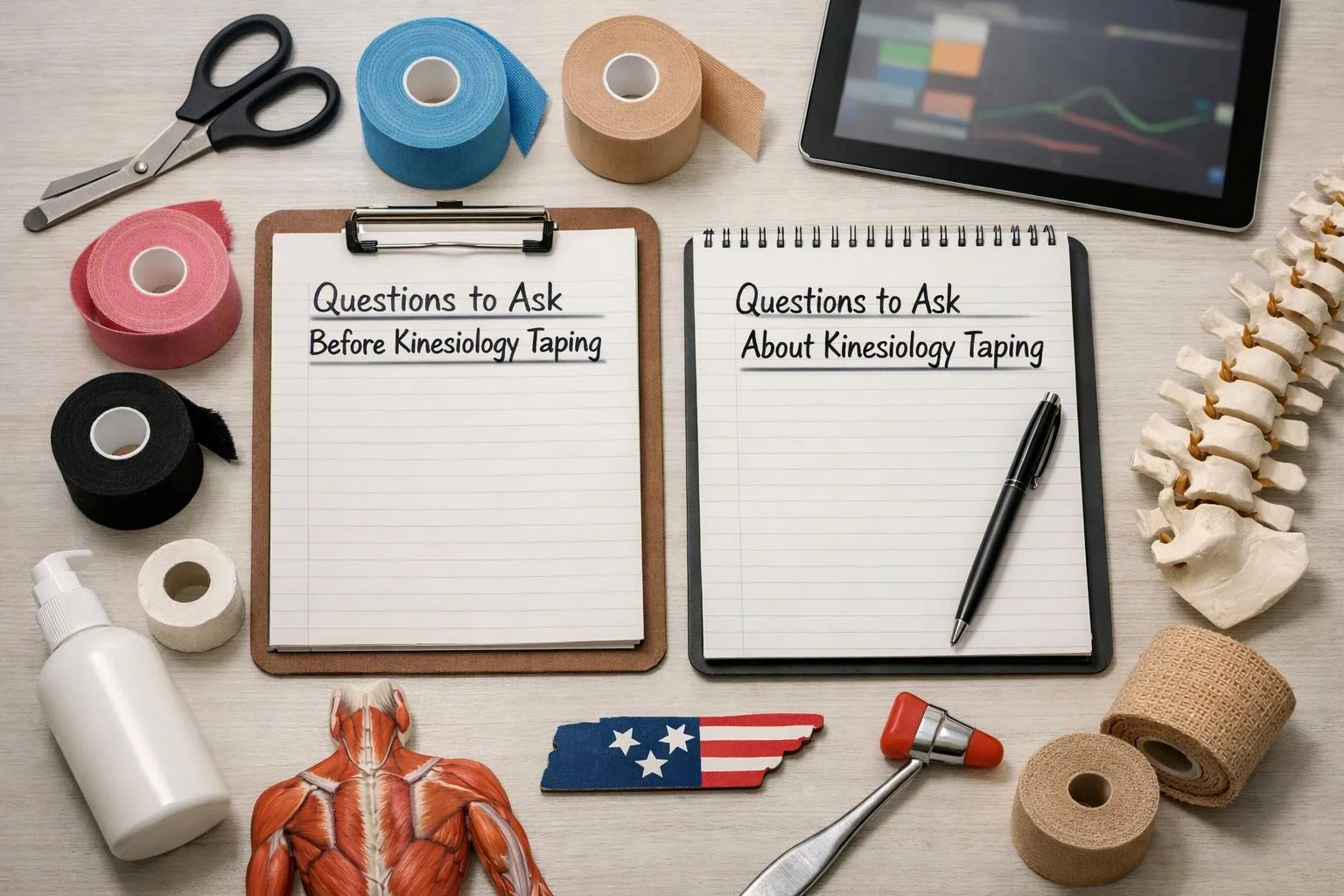
Bring up the following points before we apply tape:
What Should I Expect After Kinesiology Tape Is Applied?
After kinesiology tape is applied, you should monitor your skin, follow care instructions, and report worsening discomfort or irritation.
We explain how to manage tape care during exercise, sweat, and showering. You should watch the tape edge and the skin around it for itching, burning, redness, or increasing discomfort.
Our aftercare instructions cover when to remove the tape and how to loosen it without pulling hard on the skin. Stop using the tape and contact us if discomfort worsens or a skin reaction develops.
When Should Kinesiology Taping Be Combined With Physical Therapy?
Physical therapy should be combined with kinesiology taping when the injury requires movement assessment, strengthening, mobility work, or a broader rehabilitation plan.
We use taping as one part of sports injury treatment when support may help you perform rehabilitation exercises or practice safer movement. The broader plan may address strength, mobility, coordination, and range of motion.
Our team reviews how the tape fits with your rehabilitation plan and exercise guidance. Chiropractic care may also be considered when the injury assessment shows a movement or joint concern that belongs in a broader treatment plan.
How Can I Discuss Kinesiology Taping With Advanced Injury Care Clinic?
Advanced Injury Care Clinic can discuss whether a kinesiology taping consultation fits your sports injury treatment and physical therapy goals.
We use your symptoms, injury history, skin needs, movement assessment, and current treatment to shape the discussion. Our team can explain the intended support, tape application, aftercare, and how taping may fit within rehabilitation.
Contact Advanced Injury Care Clinic to discuss whether kinesiology taping belongs in your treatment plan.
Questions About Kinesiology Taping
Can kinesiology tape help with swelling?
Yes, kinesiology tape may support a treatment plan for swelling when the injury assessment identifies it as an appropriate goal. Advanced Injury Care Clinic reviews the affected area, skin condition, and movement needs before applying tape.
Can I exercise while wearing kinesiology tape?
Yes, you may be able to exercise while wearing kinesiology tape when the activity matches your treatment plan and the tape remains comfortable. Follow our exercise guidance and stop if the tape causes increasing discomfort or skin irritation.
What should I do if kinesiology tape makes my skin itch?
Remove kinesiology tape if itching continues or becomes uncomfortable, and contact us if the skin remains irritated. Increasing redness, burning, swelling, or signs of an allergic reaction require prompt attention.
How do I remove kinesiology tape without irritating my skin?
Remove kinesiology tape slowly and gently in the direction of the skin while supporting the area with your other hand. Follow our aftercare instructions and stop if removal causes pain or skin damage.
Can kinesiology taping replace physical therapy?
No, kinesiology taping does not replace physical therapy when an injury requires strengthening, mobility work, movement assessment, or a broader rehabilitation plan. Taping may support physical therapy goals as part of a coordinated treatment plan.
Related Resources
Benefits of Physical Therapy for Injury Recovery and Mobility
When You Need ItSigns You Need Chiropractic Care After a Car Accident
When You Need ItSports Injury Warning Signs That Mean You Should See a Chiropractor
When You Need ItWhen Back Pain or Sciatica Symptoms Mean You Should See a Chiropractor