When Back Pain or Sciatica Symptoms Mean You Should See a Chiropractor
Back pain or sciatica symptoms may warrant chiropractic evaluation when they persist, limit movement, recur, or interfere with daily activities; Advanced Injury Care Clinic checks your symptoms and recommends appropriate care, including chiropractic adjustment, spinal decompression therapy, physical therapy, or corrective exercise therapy.
Request an EstimateWhen Should You See a Chiropractor for Back Pain or Sciatica?
Chiropractic evaluation is worth considering when back pain or sciatica persists, returns, limits movement, or disrupts normal activities, provided urgent warning signs are not present.
Advanced Injury Care Clinic reviews the pattern of your symptoms before recommending care. A chiropractic adjustment may help address restricted spinal movement, joint stiffness, or mechanical back pain when those findings fit your condition.
Warning Signs That Back Pain or Sciatica Needs Attention
Back pain or sciatica needs prompt attention when symptoms worsen, affect nerve function, follow a serious injury, or involve bladder, bowel, or saddle-area changes. The following signs can help you decide when to seek an evaluation.
We use these details to understand whether your symptoms appear musculoskeletal or may need medical assessment first. You can mention related concerns, such as pain with movement, muscle tension, or tingling in the leg, during your appointment.
When Back Pain Requires Urgent Medical Evaluation
Urgent medical evaluation is needed for back pain with loss of bladder or bowel control, saddle numbness, progressive weakness, or major trauma.
Severe neurological symptoms can signal a condition that needs immediate medical attention. Do not wait for a routine chiropractic scheduling process when these red flags are present. Seek urgent care, and tell the medical team about your back pain, radiating pain, and other nerve symptoms.
What We Check Before Recommending Chiropractic Care
Advanced Injury Care Clinic reviews your symptoms, movement, nerve-related signs, and functional limitations before recommending a care approach.
Our team takes a symptom history and asks about pain location, pain pattern, aggravating activities, and changes over time. We also assess range of motion, spinal alignment, movement quality, and daily limitations.
A neurological screening helps us note numbness, tingling, muscle weakness, or other signs involving the sciatic nerve. These findings help us decide whether conservative care is suitable or whether a medical referral is more appropriate.
DIY Care or Chiropractic Evaluation: Which Next Step Fits?
Gentle self-care can fit mild, improving symptoms, while persistent, recurring, or function-limiting symptoms support an evaluation with our team. Activity modification should reduce strain without causing complete inactivity.
| Factor | What you can do yourself | What we do |
|---|---|---|
| Mild symptoms | Use comfortable movement, gentle self-care, and activity modification. | Review the symptoms if they persist or fail to improve. |
| Recurring symptoms | Track what brings on the pain and which activities make it worse. | Assess the movement pattern and contributing functional limitations. |
| Nerve symptoms | Stop activities that increase numbness, tingling, or weakness. | Perform a neurological screening and determine whether care or referral fits. |
| Treatment planning | Continue only movements that feel safe and do not worsen symptoms. | Recommend chiropractic adjustment, spinal decompression therapy, physical therapy, or corrective exercise therapy when appropriate. |
Self-care does not replace an assessment when pain affects walking, sleep, work, or ordinary movement. We match the next step to your examination findings and symptom response.
How Chiropractic Treatment Can Address Back Pain and Sciatica
Chiropractic treatment addresses back pain and sciatica by matching the care approach to your movement findings, symptom pattern, and functional needs.
A chiropractic adjustment may support joint mobility and more comfortable spinal movement when restricted motion contributes to mechanical back pain. We apply care based on the areas involved and how your symptoms respond.
Spinal decompression therapy may be considered when the evaluation suggests that reducing load or irritation around the spine could support comfort. We also look for signs of nerve irritation that may contribute to radiating leg pain.
When Physical Therapy or Corrective Exercise Belongs in the Plan
Physical therapy and corrective exercise therapy fit a care plan when strength, mobility, movement control, or conditioning contributes to back pain or sciatica.
Our team may use exercises to support core strength, hip and lumbar mobility, and better movement control. The goal is to help you build capacity without repeatedly provoking symptoms.
Home exercise can support reconditioning between visits when the movements are appropriate for your findings. We explain how to perform each exercise and how to respond if symptoms change.
What to Expect During a Chiropractic Back Pain Evaluation
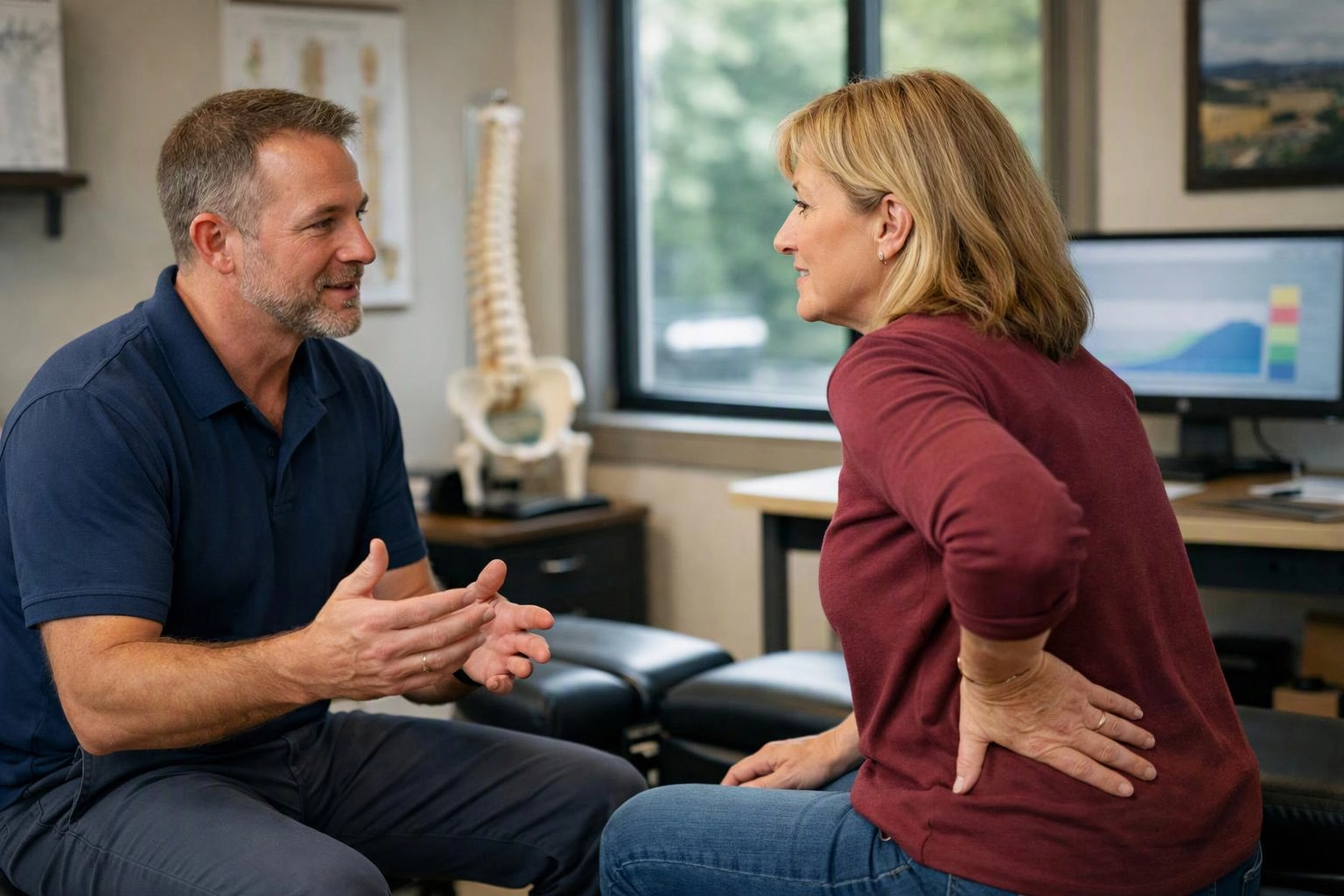
A chiropractic back pain evaluation starts with your health history and symptom assessment, then uses a physical examination to guide care recommendations. Our team focuses on the information that helps explain your pain and movement limits.
We encourage you to bring a clear description of your symptoms and any changes in daily activities. That information helps us connect your concerns with the examination findings.
How to Decide Whether to Schedule a Chiropractic Visit
Schedule a chiropractic evaluation when back pain or sciatica is not improving, keeps returning, or makes ordinary movement and activities difficult.
Consider symptom severity, symptom duration, sleep disruption, daily activities, recurring pain, and changes in nerve function. These factors help show whether conservative care may be suitable.
Medical referral is the safer next step when symptoms include progressive weakness, saddle numbness, loss of bladder or bowel control, or major trauma. For other concerns, our team can assess your condition and explain the most appropriate care path.
Questions About Back Pain and Sciatica Care
Can a chiropractor help with sciatica symptoms?
Yes, chiropractic care may help suitable sciatica symptoms, and Advanced Injury Care Clinic first checks your symptom pattern, movement, and nerve-related signs. We may recommend an adjustment, spinal decompression therapy, exercise-based care, or medical referral based on the findings.
Should I see a chiropractor for back pain that keeps coming back?
Yes, recurring back pain supports a chiropractic evaluation when urgent warning signs are absent. We look for movement restrictions, contributing habits, muscle weakness, and other factors that may affect your daily function.
Can chiropractic care help with back pain that travels down the leg?
Chiropractic care may help back pain with radiating leg pain when the examination supports conservative treatment. We screen for numbness, tingling, muscle weakness, and other nerve symptoms before selecting care.
What should I do if back pain causes numbness or weakness?
Back pain with new or worsening numbness or weakness needs prompt attention. Seek urgent medical evaluation for progressive weakness, saddle numbness, or loss of bladder or bowel control.
Can I try self-care before scheduling a chiropractic evaluation?
Yes, gentle self-care and activity modification can fit mild, improving symptoms without red flags. Schedule an evaluation when symptoms persist, recur, limit movement, or interfere with normal activities.
Advanced Injury Care Clinic evaluates back pain and sciatica symptoms, checks for warning signs, and explains whether conservative chiropractic care or medical referral fits your situation.
Contact our team to discuss your symptoms and next step.