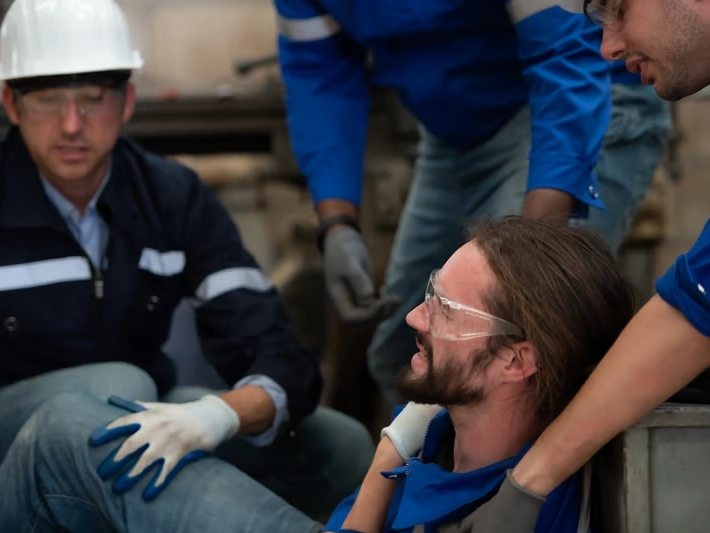
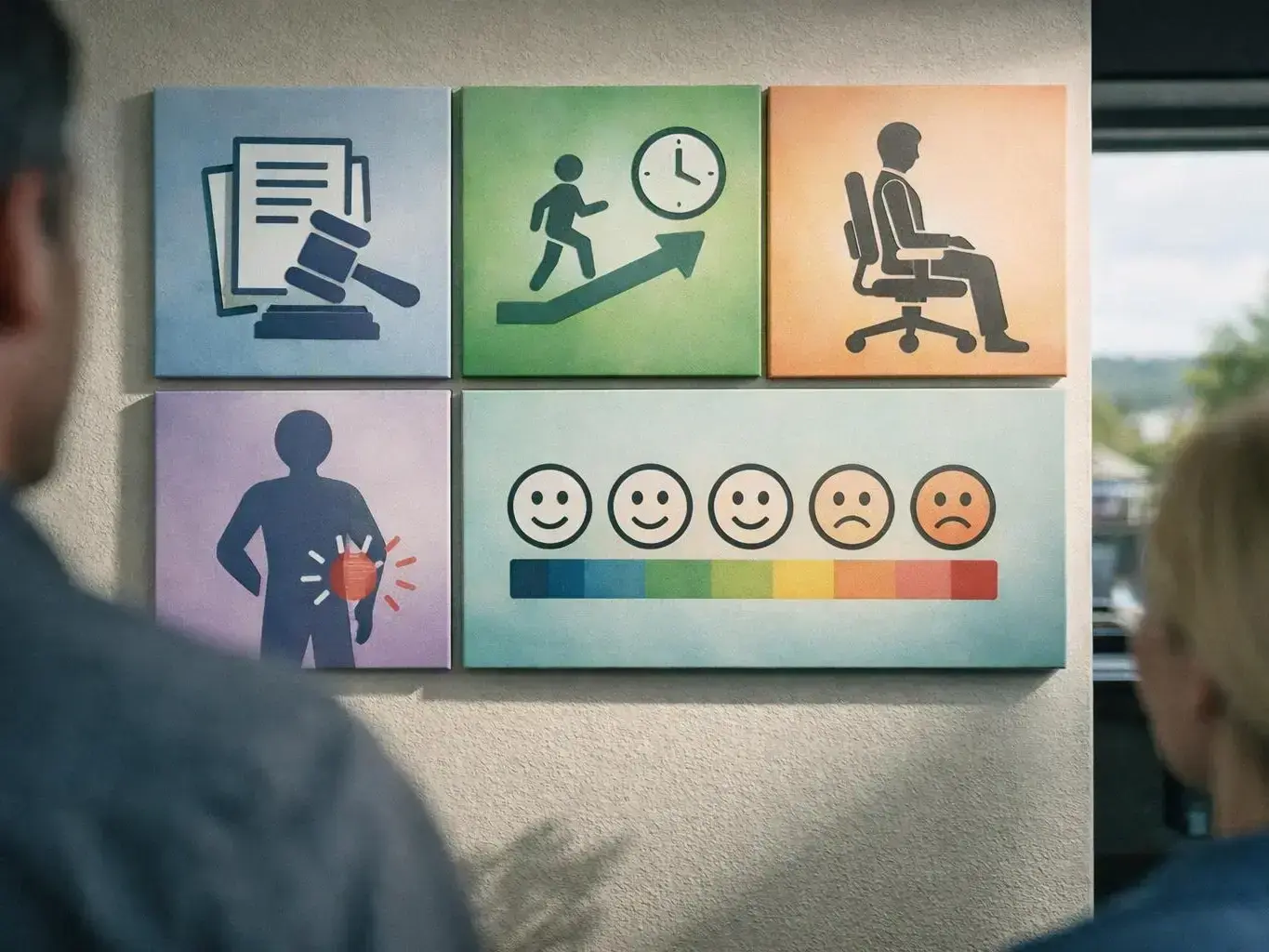
Workers Compensation is a state-mandated insurance program that provides medical benefits, wage replacement. And rehabilitation services to employees who suffer job-related injuries or illnesses. Workers Compensation ensures injured workers receive care without proving employer fault. While employers gain protection from lawsuits related to workplace injuries.
Category
Insurance and employee benefit
Used for
Job-related injuries and illnesses
Common confusion
Not the same as disability insurance or unemployment benefits
Also called
Workers' Comp, Work Comp
Often discussed with
Work Injury Treatment, Workers Compensation Doctor

Workers Compensation is a legal safety net designed to protect both employees and employers when workplace injuries occur. It operates as a no-fault system, meaning employees receive benefits regardless of who caused the injury. In exchange, employers receive immunity from most lawsuits related to the injury. This trade-off helps maintain workplace stability and ensures injured workers get timely medical attention.
Related glossary terms: Personal Injury Protection, Medical Lien, Soft Tissue Therapy.
Every state in the U.S. Has its own Workers Compensation laws. Though they share common principles. Tennessee, for example, requires most employers with five or more employees to carry Workers Compensation insurance. The program covers medical expenses, temporary disability payments. And permanent disability benefits if the injury leads to long-term impairment. It also includes vocational rehabilitation for workers who can't return to their previous job.
The process begins when an employee reports a work-related injury to their employer. The employer then files a claim with their Workers Compensation insurance carrier. A doctor evaluates the injury to confirm it's work-related and determines the appropriate treatment plan. If approved, the insurance company pays for medical care directly. And the employee may receive partial wage replacement if they miss work.
Wage replacement benefits typically cover about two-thirds of the employee’s average weekly wage, up to a state-set maximum. These payments continue until the employee returns to work or reaches maximum medical improvement, meaning their condition is unlikely to improve further. If the injury results in permanent disability, the worker may receive additional compensation based on the severity of the impairment.

For employees, Workers Compensation provides financial security during recovery, ensuring access to medical care without out-of-pocket costs. Without it, injured workers might face overwhelming medical bills or lost income, leading to financial hardship. For employers, the program limits liability and prevents costly lawsuits, which can disrupt business operations and damage reputations.
Workers Compensation also encourages safer workplaces. Employers who prioritize safety often see lower insurance premiums, creating a financial incentive to reduce hazards. And the program helps workers return to their jobs more quickly by covering rehabilitation services, which benefits both the employee and the employer.
Workers Compensation becomes critical in several situations. First, it applies immediately after a workplace injury, whether it’s a sudden accident like a fall or a repetitive stress injury like carpal tunnel syndrome. Employees should report injuries as soon as possible, as delays can jeopardize their ability to receive benefits. Second, it matters during long-term recovery, especially if the injury prevents the employee from returning to their previous job.
Workers Compensation is also important during disputes. If an insurance company denies a claim, the employee can appeal the decision through their state’s Workers Compensation board. Employers may also contest claims if they believe the injury is not work-related. In these cases, medical records and witness statements play a key role in resolving the dispute. Finally, Workers Compensation matters when an injury leads to permanent disability, as it provides ongoing support for workers who can no longer perform their job duties.
Disability insurance covers injuries or illnesses that occur outside of work. While Workers Compensation only applies to job-related incidents.
Unemployment benefits provide temporary income for workers who lose their jobs, not for those injured on the job.
PIP covers medical expenses after car accidents, regardless of fault. While Workers Compensation covers work-related injuries only.
Workers Compensation laws vary by state. And Tennessee has specific deadlines for reporting injuries and filing claims. Missing these deadlines can result in losing benefits. So prompt action is essential.
A warehouse worker in Brentwood, TN, lifts a heavy box and feels a sharp pain in their lower back. They report the injury to their supervisor, who files a Workers Compensation claim. The worker sees a doctor approved by the insurance company and receives physical therapy. Because they miss two weeks of work, they also receive partial wage replacement during recovery.
Personal Injury Protection is a type of car insurance coverage that pays for medical expenses, lost wages. And other costs after a vehicle accident, no matter who caused the crash. It covers the policyholder, passengers. And sometimes pedestrians, even if they lack health insurance. Coverage limits and rules vary by state.
Medical Lien is a legal claim that a healthcare provider, such as a chiropractor, places on a patient’s personal injury settlement or court award to ensure payment for treatment. Medical liens allow patients to receive necessary care without upfront costs while guaranteeing the provider will be paid from any future financial recovery.
Soft Tissue Therapy is a hands-on treatment that targets muscles, tendons, ligaments. And fascia to reduce pain, improve mobility. And promote healing. Soft Tissue Therapy uses techniques like massage, stretching. And pressure to break up scar tissue, increase blood flow. And relax tight muscles. It's often used alongside chiropractic care to support recovery from injuries or chronic conditions.
Spinal Decompression is a non-surgical treatment designed to relieve pressure on the spine and spinal nerves. It involves gently stretching the spine using a motorized table or similar device to create negative pressure within spinal discs, which can help herniated or bulging discs retract, promote healing.
Electrical Muscle Stimulation is a therapeutic technique that uses controlled electrical impulses to cause muscle contractions. These impulses mimic signals from the nervous system, helping to reduce pain, improve circulation. And strengthen muscles after injury or surgery. The treatment is non-invasive and typically administered using small electrodes placed on the skin.
Advanced Injury Care Clinic
Contact Advanced Injury Care Clinic for practical guidance on Workers Compensation and related chiropractor work in Brentwood.