
Skip to content

Corrective Exercise Therapy in Franklin, Tennessee

Movement screening guides safe care in Franklin when pain, weakness, or poor control affects daily movement. Free consultations help you discuss your goals before treatment planning begins.

Upfront, Transparent PricingServing 18 CommunitiesMon-Fri: 9 am–7 pm, Sat: 9 am–2 pm, Sun: ClosedFast Scheduling

Quick Summary: Corrective Exercise Therapy in Franklin, Tennessee

Corrective exercise therapy in Franklin is provided by Advanced Injury Care Clinic for mobility, strength, balance, and core control needs. Care is available in Franklin, Williamson County, and the greater Nashville area, with treatment plans tailored to each patient.

  • What we do: Advanced Injury Care Clinic provides corrective exercise therapy in Franklin, Tennessee, after assessing movement and recovery needs.
  • What is included: Movement screening, mobility drills, strength training, balance work, and core activation.
  • What you get: The patient receives an exercise plan that supports safer movement and improved daily function.

Why does my pain keep returning after I move or exercise?

Pain may return when weakness, limited mobility, or poor movement control remains. Corrective exercise therapy checks those patterns and builds a plan around them.

Corrective Exercise Therapy for Movement Screening and Recovery

Corrective exercise therapy gives patients a focused way to address movement limits after injury or during ongoing pain. Our work suits people recovering from auto accidents, workplace injuries, sports injuries, and everyday strain.

The key decision is whether guided exercise fits your current condition. We begin with a movement screening, review your health history, and consider symptoms such as back pain, whiplash, sciatica, or joint discomfort.

This page focuses on what exercise care includes, not only on adjustments or passive treatment. Some patients need chiropractic adjustments, spinal decompression, physical therapy, or massage therapy as part of a broader plan. We explain the available options and set a plan around your needs.

  • Ask whether movement screening fits your symptoms and current activity level.
  • Discuss pain, weakness, balance concerns, and movements that feel limited.
  • Expect exercises to be selected around your exam findings and recovery goals.
  • Review how progress will be checked during follow-up care.
A quiet waiting area shows beige chairs, a reception counter, framed art, and a closed hallway door

Service Overview

Corrective exercise therapy is a guided treatment that uses targeted exercises to improve movement, strength, balance, and control.

  • It differs from massage therapy because exercise targets active movement and muscle control, while massage focuses on soft tissue.
  • We provide this care in Franklin for patients across Williamson County and the greater Nashville area.

What Corrective Exercise Therapy Includes for Your Recovery

Advanced Injury Care Clinic provides comprehensive Corrective Exercise Therapy in Franklin. Here's what you get:

  • A movement screening checks posture, mobility, balance, and basic movement control.
  • Mobility drills address restricted motion in the joints and soft tissues involved in your symptoms.
  • Strength training builds support around areas affected by weakness or reduced activity.
  • Balance work challenges control during standing and other daily movements.
  • Core activation teaches the muscles around the trunk to support controlled movement.
  • A personalized treatment plan connects exercises with your symptoms, goals, and follow-up needs.

What You Get From a Focused Exercise Plan

Movement findings guide exercise choice

The plan starts with how your body moves, not a preset exercise list. Movement screening helps us choose drills that fit your symptoms and control.

Exercises build in clear stages

Mobility, strength, balance, and core work can be added as your control improves. We explain the purpose of each exercise so you know what to practice.

The service has a clear limit

Corrective exercise therapy is not the right first step for every problem. Severe or changing symptoms need clinical assessment before exercise is selected.

Process

How We Build Your Exercise Plan

1

Review your health history

We discuss your symptoms, injury background, activity limits, and goals before selecting exercises.

2

Complete movement screening

Movement screening checks mobility, balance, posture, strength, and control during suitable movements.

3

Select mobility drills

Mobility drills address restricted movement that affects your daily tasks or exercise goals.

4

Add strength and core work

Strength training and core activation support areas that need better control or endurance.

5

Review progress and next steps

Follow-up care checks how the exercises feel and whether the plan needs adjustment.

What Guided Exercise Can Change for Daily Movement

Targeted drills may help you move with less strain during daily activities.

Strength work supports areas that feel weak after injury or reduced activity.

Balance training gives you practice with control before harder movements are added.

Core activation may improve trunk control during lifting, walking, and position changes.

A written plan gives you a clearer way to continue suitable exercises between visits.

Regular maintenance may help you keep useful movement habits after active recovery.

How Exercise Components Serve Different Movement Needs

This table compares the main exercise components and the movement concern each one addresses.

Exercise componentPrimary focusWhat we check
Mobility drillsRestricted joint or soft-tissue motionRange and comfort during movement
Strength trainingWeakness or reduced supportControl during resistance work
Balance workUnsteady standing or movementPosture and control
Core activationReduced trunk controlSupport during position changes

The Advanced Injury Care Clinic Standard

  • Thorough Assessments
  • Tailored Care Plans
  • Clear Explanations
  • Appropriate Techniques

Questions About Guided Exercise Care

What is included in corrective exercise therapy?

Movement screening is included first, followed by exercises matched to your findings.

  • Mobility drills address restricted motion.
  • Strength training supports weak areas.
  • Balance work builds control.
  • Core activation supports trunk stability.

Advanced Injury Care Clinic explains the plan and checks progress during follow-up care.

How can I tell whether corrective exercise therapy fits my symptoms?

Your symptoms, movement control, and exam findings decide whether guided exercise fits. Pain with daily movement, reduced mobility, weakness, or balance trouble may support an exercise plan. Our team also checks whether another treatment should come first. A free consultation gives you a chance to discuss suitability before care begins.

Which part of the assessment decides the exercise scope?

The movement findings decide which exercises belong in the plan. We look at mobility, strength, balance, posture, and control during suitable tasks. Those findings help us choose a starting point and avoid adding movements that do not fit your current condition. Follow-up checks guide later changes.

When should I ask about exercise after an auto accident?

Ask about exercise after an auto accident once your condition has received a clinical assessment. Whiplash, back pain, and soft-tissue injuries can affect movement in different ways. We review your symptoms and injury history before choosing drills. In Franklin, patients can discuss this care as part of an injury-focused chiropractic plan.

Why might mobility drills come before strength training?

Mobility drills may come first when restricted motion limits safe strength work. Better movement gives you a sound base for resistance and control exercises. Our team changes the sequence when pain, weakness, or balance concerns call for a different starting point. Individual response differs.

What should I bring to the first consultation?

Relevant injury details, current symptoms, and a list of activities that feel difficult help guide the first consultation. You can also bring medical records or imaging that relates to the condition. We review the information, perform an assessment, and explain suitable next steps without assuming that every patient needs the same plan.
Contact

Discuss Corrective Exercise Therapy in Franklin

Advanced Injury Care Clinic offers free consultations for people considering corrective exercise therapy in Franklin. After you reach out, we can discuss your symptoms, review the first assessment steps, and explain how treatment planning works.

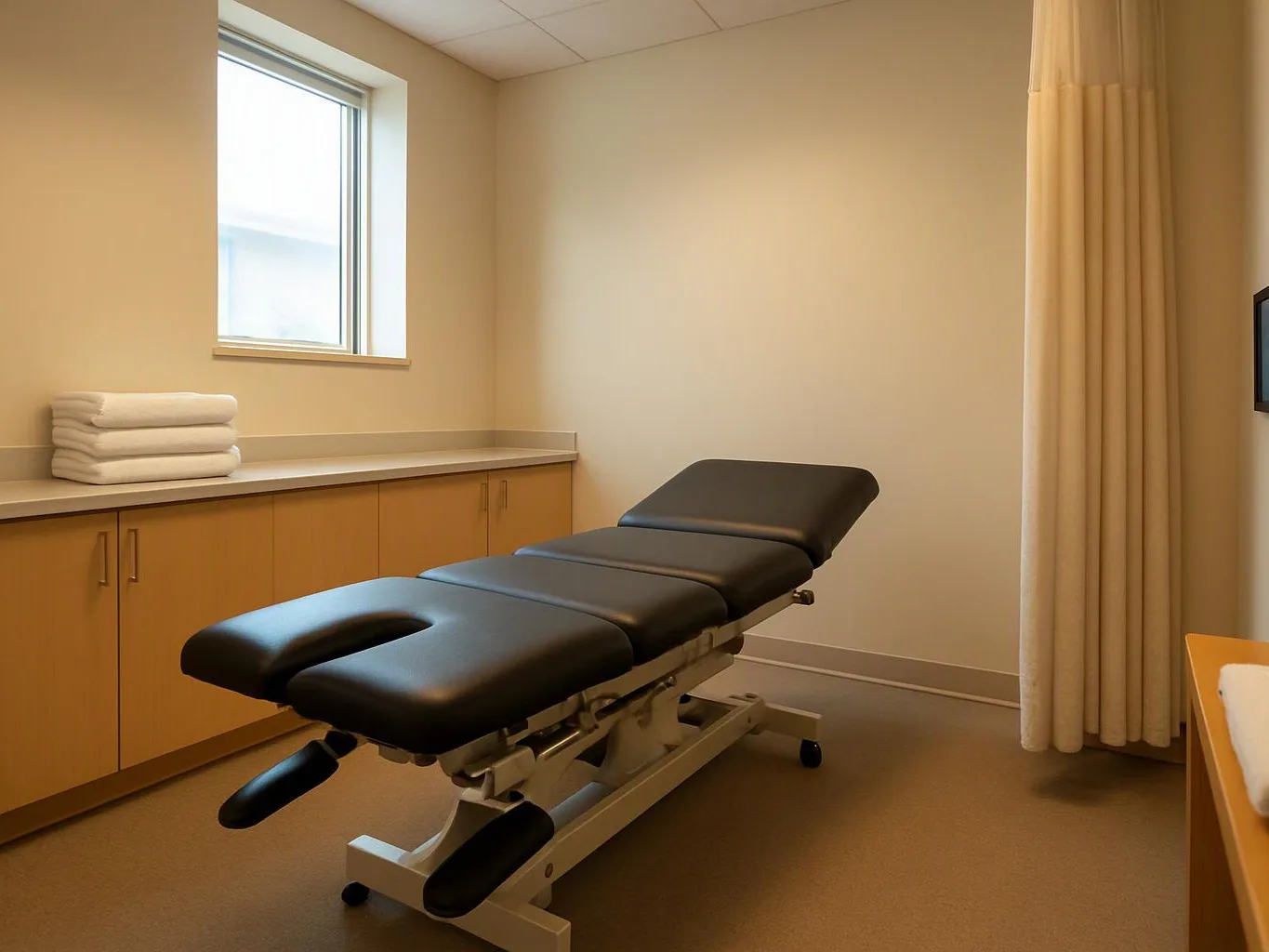
An empty examination room shows a padded treatment table, cabinets with folded towels, and a curtained corner by a window

ZIP Codes We Serve in Franklin, Tennessee

3706437065370673706837069

Corrective Exercise Therapy in Other Areas

The health and wellness information on this website is for general informational purposes only and is not medical advice. It does not create a provider-patient relationship. Always consult a qualified licensed provider in Brentwood, Tennessee, United States about your specific condition before making care decisions. Individual results vary.

(615) 265-0412