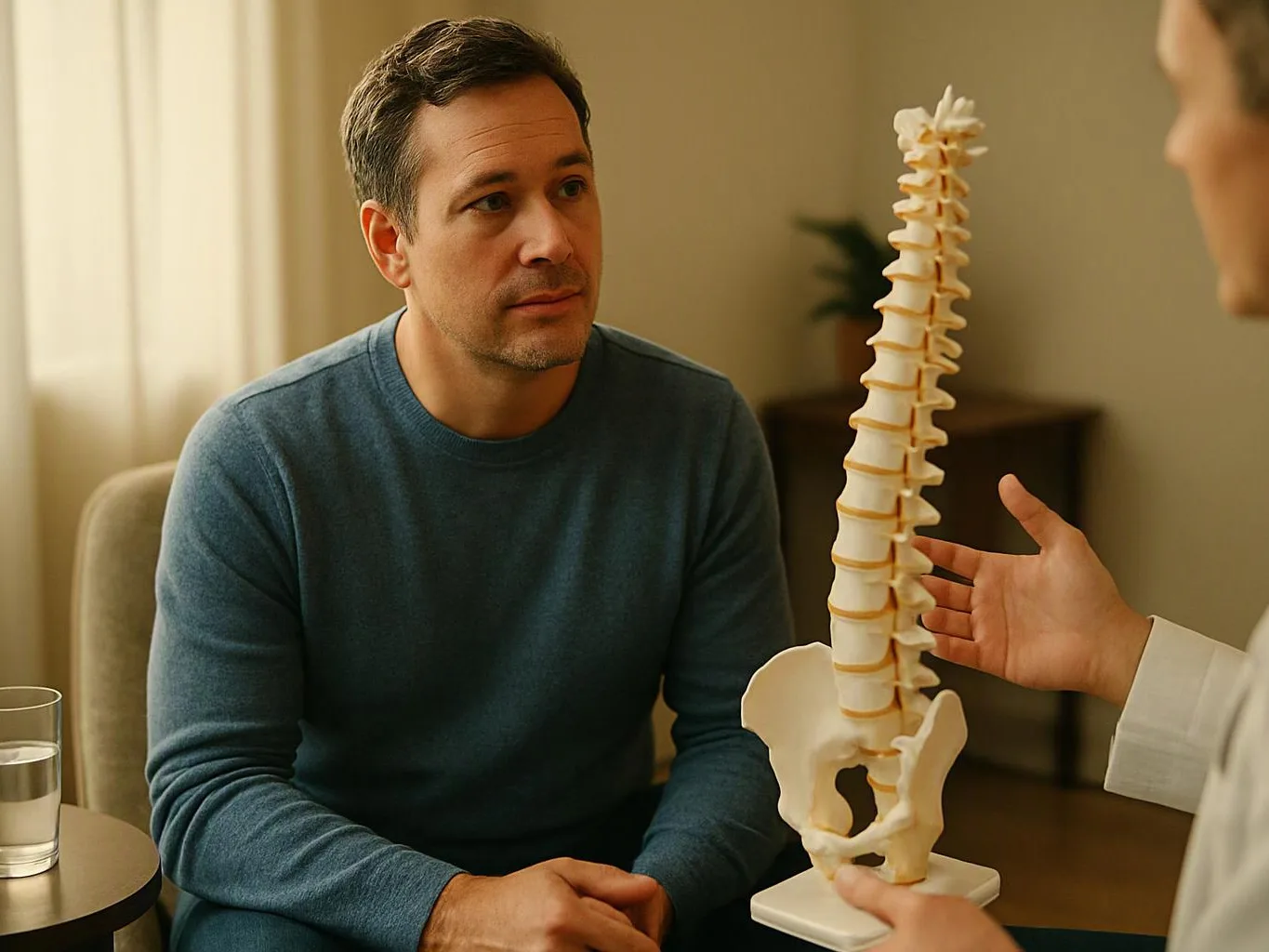
What to Expect From Spinal Decompression Therapy
Spinal decompression therapy typically begins with an assessment and discussion of your symptoms, followed by positioning on a specialized table and a controlled treatment session; Advanced Injury Care Clinic explains each step, checks your response and discusses next steps with you.
Request an EstimateWhat Happens During Spinal Decompression Therapy?
Spinal decompression therapy begins with positioning and a controlled table-based session guided by the treatment plan.
Our team starts with a chiropractic assessment that considers your symptoms and the part of the spine involved. The session may focus on the lumbar spine for back pain or the cervical spine for neck pain, depending on the clinical evaluation.
You are positioned on a treatment table with support straps placed to help target the intended area. Controlled traction creates a carefully guided pulling motion, while we monitor your pressure response, comfort level and communication throughout the treatment session.
What Does the First Spinal Decompression Appointment Include?
The first spinal decompression appointment includes a review of your symptoms, health history and treatment goals before any session begins.
The length of an appointment depends on the assessment, discussion and planned care. Our team explains what your visit includes so you can understand the process before treatment begins.
How Should You Prepare for Spinal Decompression Therapy?
Preparing for spinal decompression therapy means bringing relevant health information, describing your symptoms clearly and asking questions about the planned care.
Clear information helps us make the clinical assessment more useful. You should also report any recent change in symptoms before a treatment session begins.
What Does Spinal Decompression Therapy Feel Like?
Spinal decompression therapy uses controlled table movement and traction, while the chiropractic team monitors comfort and adjusts the session when appropriate.
Many patients notice a gentle traction sensation as the table moves through the planned cycle. You may also feel pressure from the support straps or contact points used for patient positioning.
We ask about your comfort level and watch your treatment response during the session. Patient communication helps us decide whether the positioning, pressure monitoring or table movement needs to be adjusted.
What Should You Discuss Before Starting Treatment?
Before starting spinal decompression therapy, discuss your symptoms, relevant health conditions, treatment goals and any prior spinal procedures.
| Topic | What to discuss |
|---|---|
| Diagnosis | Ask how the clinical evaluation relates to your symptoms and whether the suspected source involves the spine or an intervertebral disc. |
| Treatment goals | Explain what you hope to improve and how the care plan will address those goals. |
| Health conditions | Share conditions, medications and other health details that may affect traction therapy. |
| Prior spinal procedures | Tell us about surgeries, injections or other procedures involving the cervical spine or lumbar spine. |
| Symptom changes | Report new, worsening or unusual symptoms before treatment starts. |
| Expected care process | Ask how positioning, treatment response and follow-up care will be reviewed. |
These questions help connect your health history with the recommended treatment plan. We use your answers to explain the expected care process in clear terms.
How Advanced Injury Care Clinic Guides Your Treatment Plan
Advanced Injury Care Clinic uses the consultation and clinical assessment to explain the care plan, discuss upfront pricing and review whether spinal decompression therapy fits your needs.
Our team considers your symptoms, health history, treatment goals and treatment response before recommending individualized care. We also explain how the treatment table, support straps and controlled traction fit into the planned session.
We provide Free Consultations so you can discuss your concerns and understand the proposed process before making care decisions. We answer questions about the expected sensations, follow-up plan and factors that may change the recommended approach.
What Questions Should You Ask About Spinal Decompression Therapy?
Useful questions cover treatment suitability, the reason for the recommended plan, what sensations to expect and how progress will be reviewed.
Asking these questions gives you a clearer role in treatment planning. Our team welcomes communication during the consultation and treatment session.
What Happens After a Spinal Decompression Session?
After a spinal decompression session, discuss how your body responded with the chiropractic team so the care plan can be reviewed appropriately.
Tell us about changes in comfort, pressure, movement or symptoms after the treatment table session. Clear symptom communication helps us understand your post-treatment response.
We use that discussion to guide follow-up care, review activity guidance and decide whether the treatment plan needs attention. Contact our team promptly if you notice a concerning or unexpected change after treatment.
Questions About Spinal Decompression Therapy
Can I ask questions during spinal decompression therapy?
Yes, Advanced Injury Care Clinic encourages questions during spinal decompression therapy so we can monitor your comfort and respond to changes during the session.
What information should I bring to a spinal decompression consultation?
Bring your health history, current symptoms, medication information and details about prior spinal procedures so the clinical assessment can support an individualized care plan.
How does the chiropractic team decide whether spinal decompression is appropriate?
The chiropractic team considers your symptom review, health history, physical examination, treatment goals and relevant safety factors before discussing whether spinal decompression fits your needs.
What should I report after a spinal decompression session?
Report changes in symptoms, comfort, pressure, movement or any unexpected response so the chiropractic team can review follow-up care appropriately.
Can spinal decompression therapy be adjusted if I feel uncomfortable?
Yes, spinal decompression therapy can be reviewed and adjusted when your comfort level or treatment response indicates that a change may be appropriate.
Advanced Injury Care Clinic can discuss your symptoms, answer treatment questions and explain whether spinal decompression therapy fits your care goals.
Related Resources
Spinal Decompression Therapy Benefits: Who May Benefit and Why
When You Need ItWhen Back Pain or Sciatica Symptoms Mean You Should See a Chiropractor
How Long It TakesHow Long Does Spinal Decompression Therapy Take to Work?
What Goes With ItHow to Compare Chiropractic Services in Brentwood, Tennessee