What to Expect From Sports Massage Before and After Activity
Sports massage involves discussing your activity and symptoms, checking movement, applying targeted hands-on techniques, and reviewing aftercare; Advanced Injury Care Clinic adapts the session to your needs and activity plans.
Request an EstimateWhat Happens During a Sports Massage?
Sports massage begins with a conversation about your activity, symptoms, and goals before focused hands-on work and movement checks.
We start by reviewing your health history and activity goals. We also ask about pain patterns, muscle tension, and any soft-tissue concerns that may affect the session.
Our team then uses a movement assessment to observe how the relevant areas move. This check can include range of motion, muscle balance, and movements connected to your sport or exercise.
The hands-on portion focuses on the soft tissue that matches your concerns and activity demands. We adjust the session as your response and movement findings guide our work.
How Should You Prepare for a Sports Massage?
Sports massage preparation involves sharing relevant activity and symptom details, wearing practical clothing, and arriving ready to discuss the session focus.
Preparation gives our team useful context before tissue work begins. You do not need to diagnose the problem yourself.
What Should You Discuss Before Your Session?
Sports injury treatment planning should account for recent injuries, changes in training, pain patterns, movement limitations, and relevant health history.
Tell us about any recent injury, including how it happened and what has changed since then. We also need to know whether your training load has increased, decreased, or shifted toward a new activity.
Describe symptoms that affect range of motion or change the way you exercise. Details about pain during movement, pain after activity, and ongoing soreness help us shape treatment planning.
Share relevant medical history, current care, and any concern that could affect hands-on work. We use this information to decide whether massage fits the session or whether further injury assessment is needed.
What Techniques May Be Used During Sports Massage?
Sports massage techniques are selected according to muscle tension, connective tissue concerns, range of motion, and your activity goals. Our team uses targeted pressure that matches the area and the purpose of the session.
| Technique focus | What it may address | How it fits the session |
|---|---|---|
| Focused soft-tissue work | Areas with muscle tension or restricted tissue movement | Supports a focused response based on your symptoms and movement findings |
| Connective tissue techniques | Tissue areas that may influence mobility and comfort | Helps us address tissue concerns linked to your activity |
| Targeted pressure | Specific areas that need careful, controlled attention | Changes according to your comfort and post-session response |
| Movement checks | Changes in range of motion and movement quality | Connects hands-on care with exercise planning and recovery |
Massage therapy is not a fixed routine. We use the information from your health history and movement assessment to choose the most suitable tissue work.
What Can You Expect After a Sports Massage?
After a sports massage, you can review how your body responds, follow individualized aftercare guidance, and discuss how to approach upcoming activity.
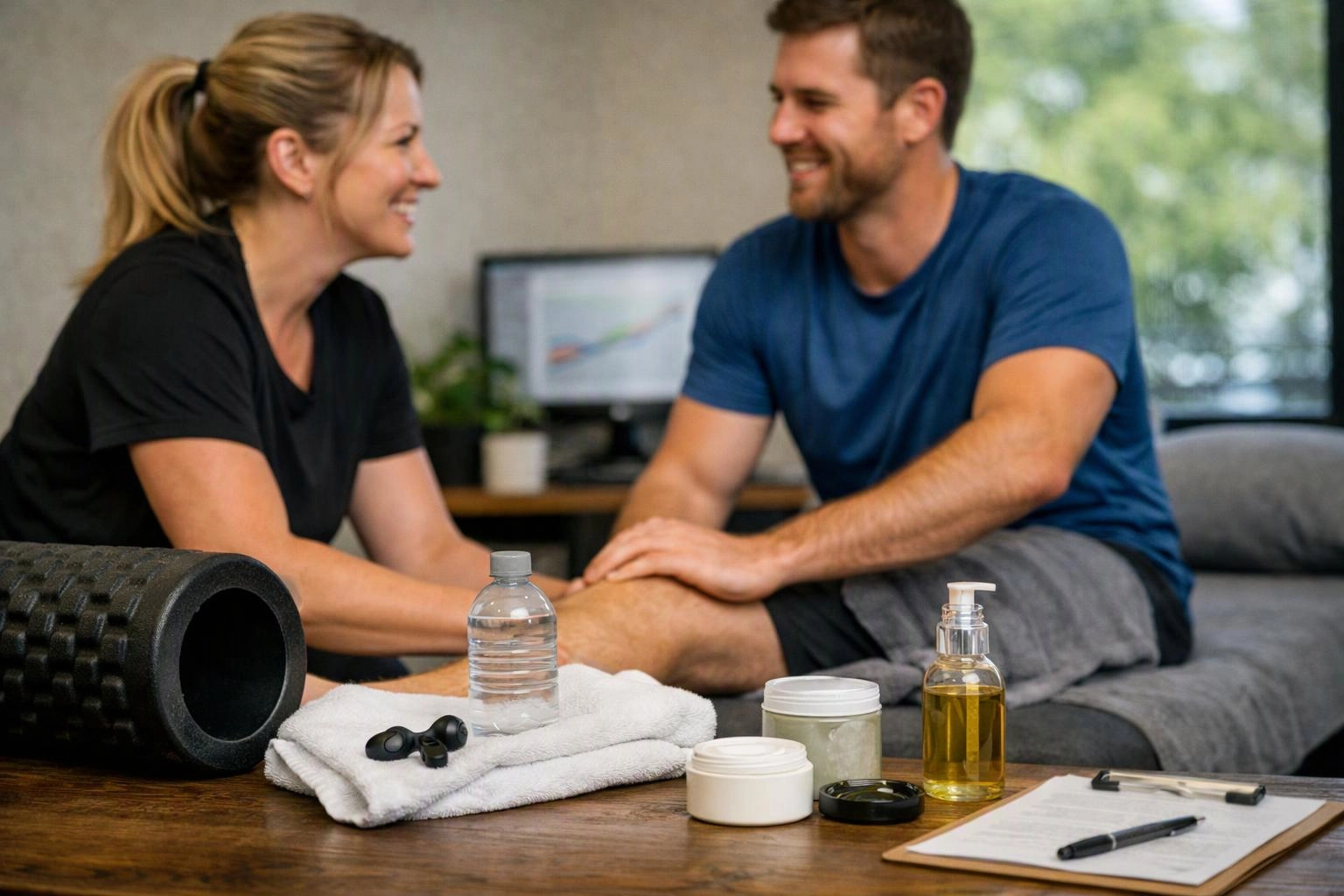
Your post-session response may include changes in movement awareness or temporary muscle soreness. Tell us what you notice so we can use that information in future treatment planning.
Our team reviews aftercare based on your activity goals and the techniques used. Guidance may address comfortable movement, hydration habits, and how to monitor symptoms during recovery.
We also discuss recovery planning for upcoming training. The right approach depends on your symptoms, movement quality, and how your body responds after the session.
How Does Sports Massage Fit With Exercise?
Sports massage and exercise planning work together when the session focus, activity demands, symptoms, and movement goals are considered as one plan.
Athletes may use massage as part of training recovery, preparation, or movement care. The best timing depends on the purpose of the session and how your body responds to hands-on work.
We connect massage findings with movement quality and corrective exercise therapy when appropriate. Exercise discussion helps us identify ways to support mobility, control, and sport-specific demands.
Our team can help you discuss how current training fits with your symptoms and recovery plan. We adjust the plan when an activity increases pain or changes your movement.
When Should Sports Massage Be Combined With Sports Injury Treatment?
Sports massage should be combined with sports injury treatment when pain, injury history, or movement changes require assessment beyond soft-tissue work.
An acute injury may need careful injury assessment before massage is considered. Persistent pain also deserves attention when it affects exercise, sleep, strength, or range of motion.
We review the injury history, current symptoms, and movement findings before choosing treatment. This approach helps us build treatment planning around the cause and effect of your activity.
Massage can support care for soft-tissue concerns, but it does not replace a full assessment when symptoms suggest a broader sports injury.
What Questions Should You Ask Before a Sports Massage?
A sports massage consultation should clarify the treatment goals, techniques, exercise timing, and aftercare that fit your situation.
These questions help you understand how the session connects with your activity. Our team explains the reasoning behind the care we recommend.
How Advanced Injury Care Clinic Personalizes Sports Massage
Advanced Injury Care Clinic personalizes sports massage by connecting your activity goals, symptoms, movement findings, and recovery plan.
We begin with your health history and exercise discussion, then use movement assessment to understand how the concern affects your body. Our team applies focused soft-tissue work and checks how your movement responds.
When appropriate, we connect massage with corrective exercise therapy and sports injury treatment. This gives your care a clear purpose related to movement quality, training recovery, and future activity.
We offer Free Consultations so you can discuss your goals and concerns before deciding on care. Contact Advanced Injury Care Clinic to discuss your sports massage needs and next steps.
Questions About Sports Massage Before and After Activity
Can sports massage help with muscle soreness after exercise?
Yes, sports massage can help address muscle soreness after exercise when the session is matched to your symptoms and movement findings. Advanced Injury Care Clinic reviews the soreness pattern and activity demands before choosing hands-on techniques.
Should you exercise immediately after a sports massage?
Exercise timing after sports massage depends on the session focus, your symptoms, and how your body responds. We discuss suitable activity and recovery planning during aftercare.
What should you tell the clinician before a sports massage?
Tell the clinician about your exercise history, pain or soreness, recent injuries, training load, medical history, and movement limitations. These details help shape a safe and useful session.
Can sports massage be used when you have a sports injury?
Yes, sports massage may be used with a sports injury when injury assessment shows that soft-tissue work fits the treatment plan. Acute injury, persistent pain, and changes in range of motion may require broader sports injury treatment.
What is the difference between sports massage and corrective exercise therapy?
Sports massage uses hands-on tissue work to address soft-tissue concerns, while corrective exercise therapy uses planned movements to support strength, control, and movement quality. We may connect both approaches when they support the same recovery plan.
Related Resources
Benefits of Physical Therapy for Injury Recovery and Mobility
When You Need ItSports Injury Warning Signs That Mean You Should See a Chiropractor
When You Need ItWhen Back Pain or Sciatica Symptoms Mean You Should See a Chiropractor
How Long It TakesHow Long Does Chiropractic Treatment Take to Work?