Glossary

What is Magnetic Resonance Imaging?

Magnetic Resonance Imaging is a medical imaging technique that uses strong magnetic fields and radio waves to create detailed pictures of the body’s internal structures, including bones, muscles, nerves. And organs. Unlike X-rays, MRI doesn't use radiation, making it a safer option for repeated scans. It's commonly used to diagnose injuries, diseases. Or abnormalities in soft tissues and joints.

Reviewed by Advanced Injury Care ClinicSources reviewed: Radiological Society of North America (RSNA), American College of Radiology (ACR)

Quick Facts About Magnetic Resonance Imaging

Category

Medical imaging technique

Used for

Diagnosing soft tissue injuries, spinal issues. And internal abnormalities

Common confusion

Often mistaken for CT scans, which use radiation instead of magnets

Also called

MRI, MRI Scan

Often discussed with

Back Pain Treatment, Neck Pain Treatment

Key Takeaways About Magnetic Resonance Imaging

Understanding Magnetic Resonance Imaging
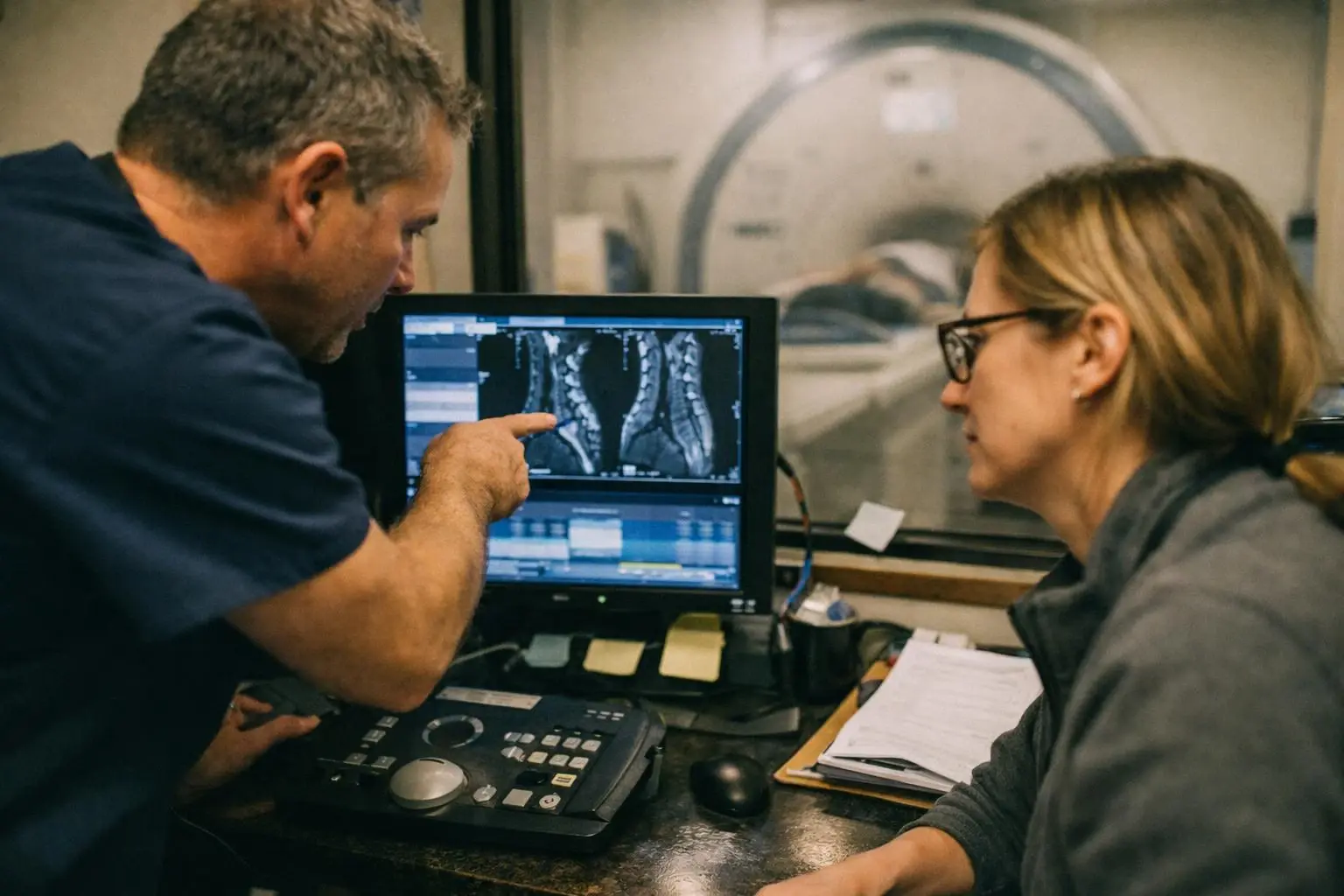
Magnetic Resonance Imaging in Chiropractor: Magnetic Resonance Imaging is a medical imaging technique that uses strong mag...

MRI is a way to see inside your body. It doesn't cut your skin. Doctors call this "non-invasive."

Related glossary terms: Chiropractic X-Ray, Disc Herniation, Nerve Impingement.

It uses strong magnets and radio waves. These make pictures of your organs, muscles. And bones. It also shows other body parts.

These pictures help doctors find problems. Problems can be torn ligaments or herniated discs (bulging spinal cushions). They can also find tumors (lumps).

MRI doesn't use radiation. X-rays and CT scans do. So MRI is safer for people who need many pictures.

How Magnetic Resonance Imaging Works?

MRI pictures show a lot of detail. They show healthy and sick tissues differently. This helps doctors see problems better.

MRI works well for the brain, spine. And joints. It also works for soft tissues. For example, it can show a herniated disc in your back. It shows where it is and how bad it is.

This helps doctors plan treatment. But some people can't have MRI. People with metal implants like pacemakers can't. The strong magnet can cause problems.

For an MRI scan, you lie on a table. The table slides into a big tube. The machine makes a strong magnetic field.

This lines up tiny parts in your body's water. Then radio waves go through your body. These tiny parts send back signals.

The machine catches these signals. It uses them to make pictures. The pictures look like slices of bread. They can be put together for a 3D view.

MRI scans don't hurt. But they can be loud. You'll get earplugs or headphones.

The scan takes 30 to 60 minutes. It depends on what part is checked. You must lie still for clear pictures.

Sometimes you get a dye. It goes in your vein. The dye helps show certain parts better.

Why Magnetic Resonance Imaging Matters?
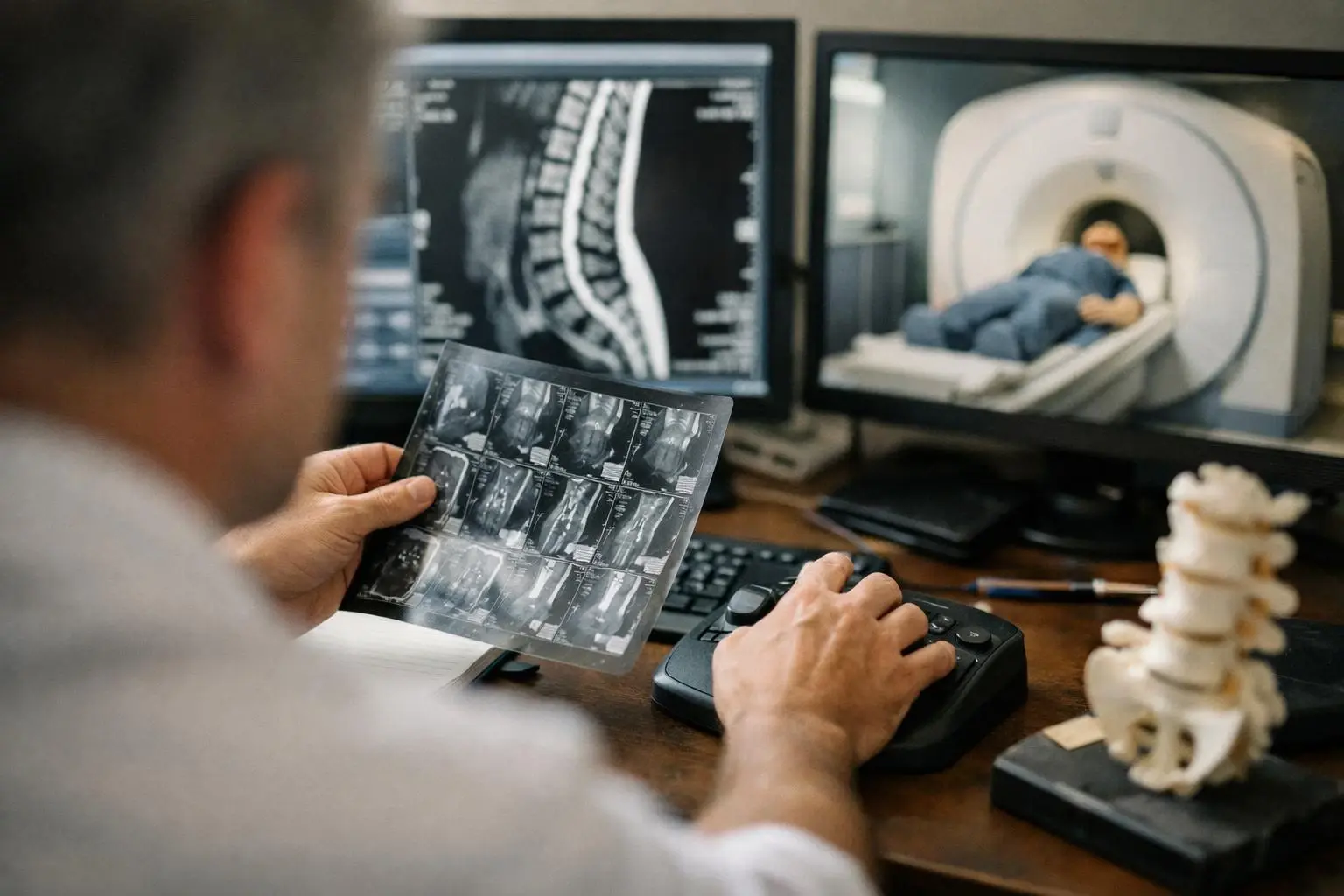
How Magnetic Resonance Imaging applies to Chiropractor services in Brentwood, United States—practical illustration

MRI helps doctors a lot. It shows things other tests can't. X-rays show bones well. But they don't show soft tissues.

MRI shows muscles, ligaments. And organs. It can find injuries or diseases others miss. This helps doctors know what's wrong.

Then they can make good treatment plans. This means less need for surgery.

MRI can change lives. It helps people with long-term pain. It helps those with nerve problems or sports injuries.

Doctors can see the real cause of pain. They can see pinched nerves or damaged tissues. Then they can suggest the right treatment.

MRI can find problems early. This helps before they get worse. It can lower health risks later.

When Magnetic Resonance Imaging Matters Most?

MRI is best for soft tissues. It helps with spinal problems. These can be herniated discs or pinched nerves.

It also shows spinal stenosis (a narrow spine). Athletes may get MRI scans. These check muscle tears, joint injuries. Or stress fractures.

MRI helps with brain problems too. It can find brain injuries or strokes. It shows things other scans might miss.

In Brentwood, TN, doctors often suggest MRI scans. They use them for pain that won't go away. Or for injuries that don't get better.

The pictures help chiropractors (back doctors) plan care. They can do spinal fixes or therapy. They base this on what the MRI shows.

MRI can also check if treatment works. It makes sure the therapy helps like it should.

How to Evaluate Magnetic Resonance Imaging?

Related Concepts Compared

Magnetic Resonance Imaging vs. Computed Tomography (CT) Scan

CT scans use X-rays and radiation to create images, making them better for viewing bones and lung issues. While MRI is better for soft tissues.

Magnetic Resonance Imaging vs. X-Ray

X-rays are quick and useful for bones but do not show soft tissues, whereas MRI provides detailed images of both bones and soft tissues.

Expert Note

MRI is particularly valuable for chiropractic care because it reveals soft tissue injuries that X-rays cannot. However, not all MRI machines are equal—higher field strengths (3T) provide clearer images, which is important for diagnosing subtle spinal or nerve issues.

Common Mistakes or Myths About Magnetic Resonance Imaging

  • Assuming MRI is the same as a CT scan—MRI uses magnets, not radiation. And is better for soft tissues.
  • Thinking MRI is unsafe for everyone—most people can safely undergo MRI. But those with metal implants may need alternatives.
  • Believing MRI is only for brain scans—it is also widely used for spinal, joint. And muscle imaging.
  • Expecting instant results—MRI images require interpretation by a radiologist, which can take a day or more.

Magnetic Resonance Imaging in Practice: A Real-World Example

A patient in Brentwood, TN, visits a chiropractor for persistent lower back pain. After an initial exam, the chiropractor recommends an MRI to check for a herniated disc or nerve compression. The MRI reveals a bulging disc pressing on a nerve, allowing the chiropractor to create a targeted treatment plan, such as spinal decompression therapy.

Related Services

Related Terms

Chiropractic X-Ray

Chiropractic X-Ray is chiropractic X-Rays are specialized medical images taken by chiropractors to examine the spine, joints. And bones for misalignments, injuries. Or abnormalities. These low-radiation images help chiropractors plan safe and effective treatments by showing bone structure, curvature.

Disc Herniation

Disc Herniation is a spinal condition where the soft, gel-like center of a spinal disc pushes through a tear in the disc’s tough outer layer. This can irritate nearby nerves, causing pain, numbness. Or weakness in the back, neck, arms. Or legs. Disc herniation often occurs in the lower back or neck due to injury, aging. Or repetitive strain.

Nerve Impingement

Nerve impingement is a condition where a nerve is compressed or irritated by surrounding tissues, such as bones, muscles, cartilage. Or tendons. This pressure disrupts the nerve’s normal function, leading to pain, numbness, tingling. Or weakness in the affected area. Nerve impingement often occurs in the spine, wrists. Or shoulders and can result from injury, repetitive motion. Or poor posture.

Spinal Stenosis

Spinal Stenosis is a narrowing of the spaces within the spine, which can put pressure on the nerves that travel through it. This condition most commonly occurs in the lower back (lumbar spine) and neck (cervical spine). Spinal Stenosis often develops slowly over time due to aging, arthritis. Or injury, leading to pain, numbness.

Soft Tissue Therapy

Soft Tissue Therapy is a hands-on treatment that targets muscles, tendons, ligaments. And fascia to reduce pain, improve mobility. And promote healing. Soft Tissue Therapy uses techniques like massage, stretching. And pressure to break up scar tissue, increase blood flow. And relax tight muscles. It's often used alongside chiropractic care to support recovery from injuries or chronic conditions.

Advanced Injury Care Clinic

Have Questions About Magnetic Resonance Imaging?

Contact Advanced Injury Care Clinic for practical guidance on Magnetic Resonance Imaging and related chiropractor work in Brentwood.

+1 615-777-0624