
What Is Spinal Stenosis?
Spinal Stenosis is a narrowing of the spaces within the spine that may reduce room for the spinal cord or nearby nerves. The narrowing can occur in the neck or lower back. Common causes include age-related changes, disc changes, arthritis, and thickened spinal tissues.
Quick Facts About Spinal Stenosis
Category
Spinal narrowing condition
Used for
Describing reduced space around spinal nerves
Common confusion
Often confused with herniated discs
Also called
Lumbar Stenosis, Spinal canal narrowing
Often discussed with
Spinal Decompression Therapy
Key Takeaways About Spinal Stenosis
- Narrowed spinal spaces distinguish stenosis from many other back conditions.
- Symptoms may change with posture, walking, sitting, or spinal movement.
- Spinal stenosis is not the same as a herniated disc.
How Spinal Stenosis Works

Spinal stenosis develops when bone, discs, joints, or thickened ligaments reduce the open space inside the spinal canal or nerve openings. The reduced space may affect the spinal cord or nerve roots. The location of the narrowing helps identify whether the condition involves the cervical spine or lumbar spine.
Related glossary terms: Nerve Compression, Lumbar Spine, Cervical Spine.
Symptoms depend on the structures involved and the amount of pressure present. Some people notice pain, tingling, numbness, or weakness that changes during standing, walking, bending, or sitting. A clinical assessment may include a movement review, neurological screening, and examination of available imaging. Spinal decompression therapy addresses the mechanical context of spinal pressure through controlled treatment directed at the affected region.
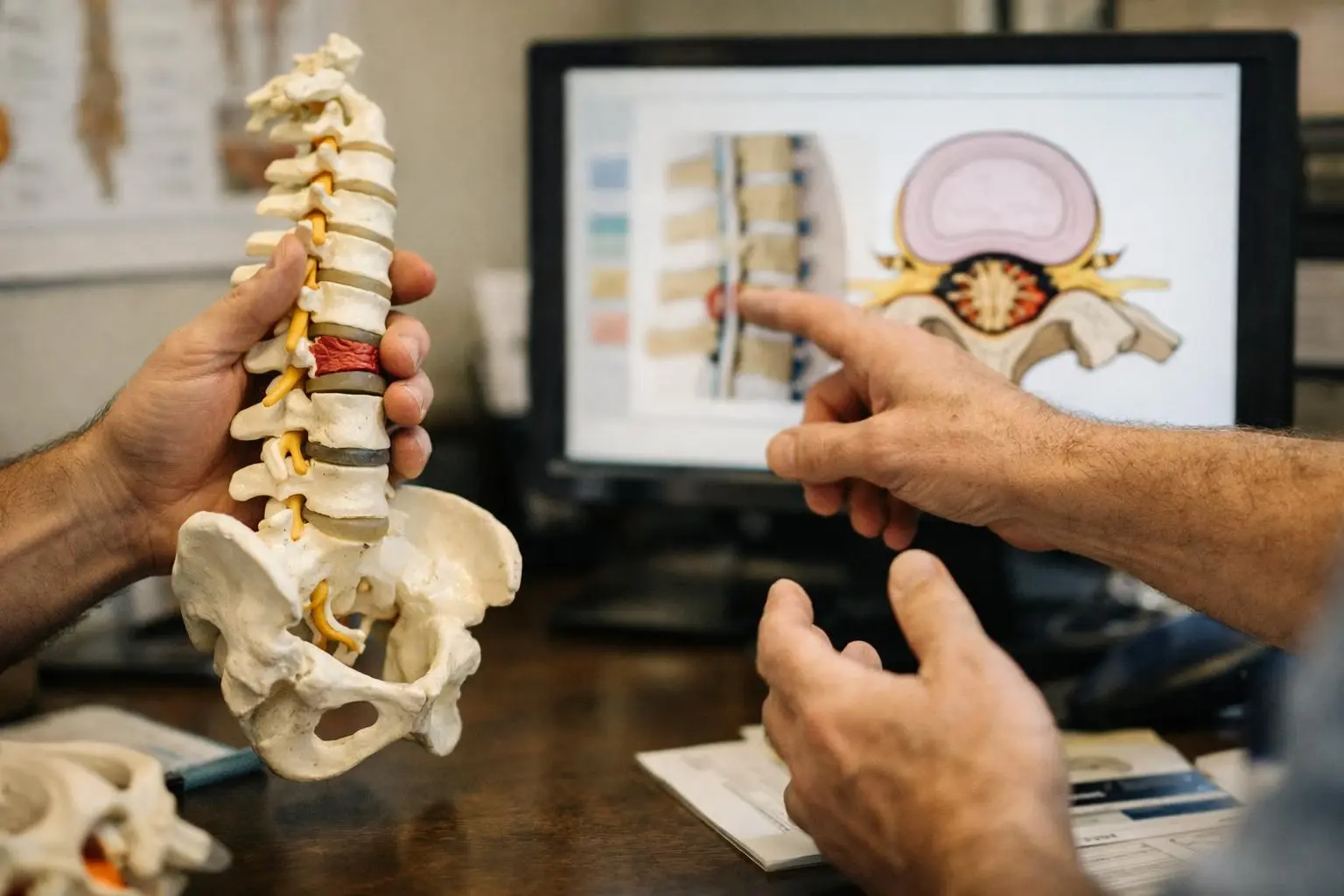
From the Advanced Injury Care Clinic team
When we assess spinal stenosis, we review the person’s symptoms, movement patterns, and available clinical findings. Our team uses that information to determine whether spinal decompression therapy fits the presentation and to monitor changes during care.
Spinal Stenosis in Practice: A Real-World Example
A person with lumbar spinal stenosis may report leg discomfort or numbness during standing that changes after sitting. During spinal decompression therapy, the treatment focus stays on the involved lower-back region and the person’s response.
Related Services
Related Terms
Nerve Compression
Nerve Compression is a condition in which pressure on a nerve disrupts normal nerve signaling. The…
Lumbar Spine
Lumbar Spine is the lower section of the vertebral column, located between the thoracic spine and…
Cervical Spine
Cervical Spine is the upper section of the vertebral column that supports the head and protects…
Bulging Disc
A bulging disc is a spinal disc that extends beyond its usual boundary as its outer…
Advanced Injury Care Clinic
Have Questions About Spinal Stenosis?
Contact Advanced Injury Care Clinic for practical guidance on Spinal Stenosis and related chiropractor work in Brentwood.