
What Is Kyphosis?
Kyphosis is an excessive outward curve of the upper spine that creates a rounded back appearance. The curve may reflect changes in spinal structure, posture, or both. Some people have no symptoms, while others notice stiffness, discomfort, reduced spinal movement, or difficulty maintaining an upright position during daily activities.
Quick Facts About Kyphosis
Category
Spinal alignment condition
Used for
Postural assessment and correction
Common confusion
Often confused with scoliosis
Also called
Rounded Upper Back, Hyperkyphosis
Often discussed with
Postural Correction, Corrective Exercise Therapy
Key Takeaways About Kyphosis
- The curve mainly affects the upper spine and creates a rounded posture.
- Postural kyphosis may change with position, while structural kyphosis may remain.
- Kyphosis is not the same condition as scoliosis or anterior pelvic tilt.
How Kyphosis Works
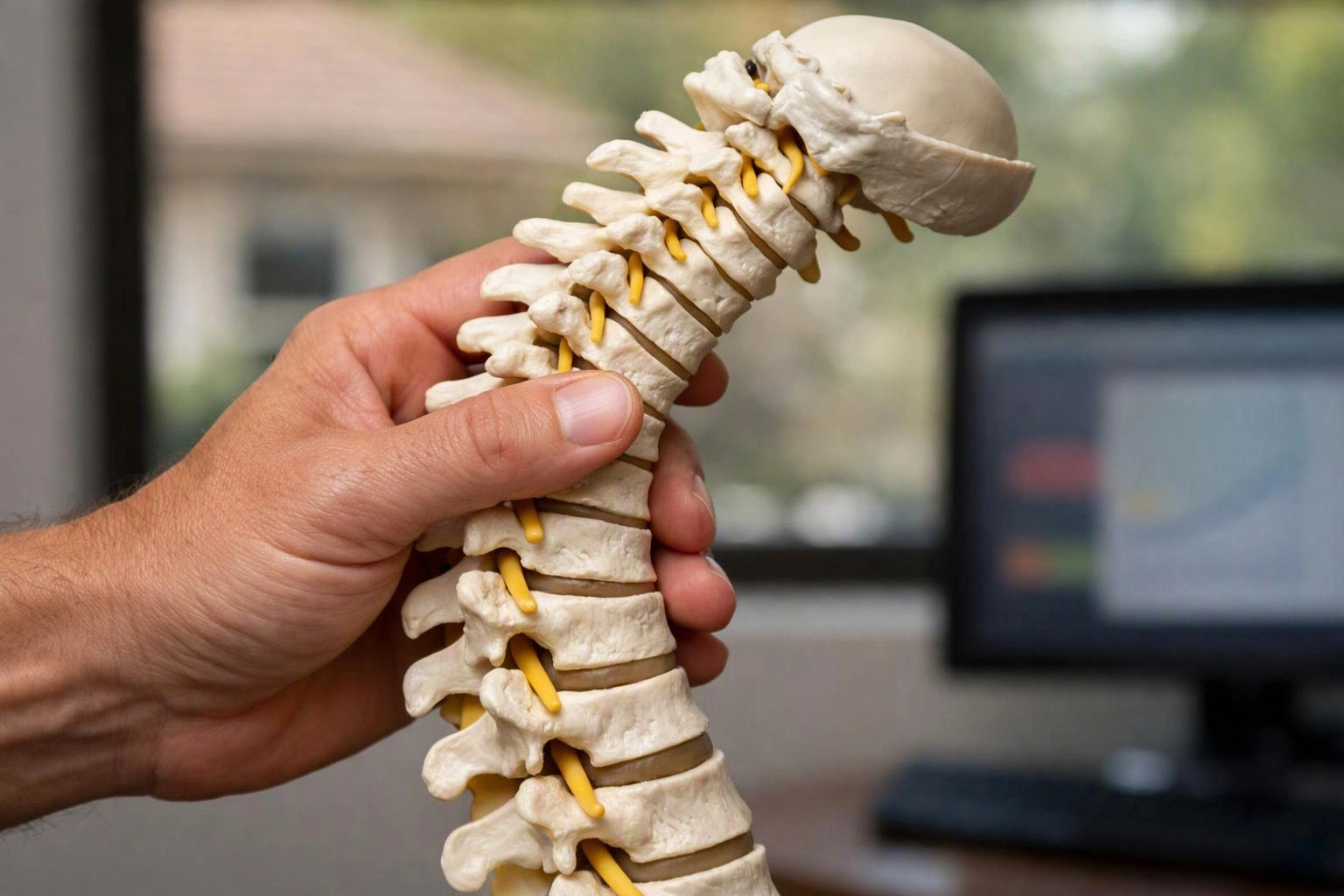
Kyphosis describes the way the upper spine curves outward when viewed from the side. A postural pattern may become more noticeable during sitting, standing, or walking and may change when you adjust your position. A structural curve relates to changes in the spine itself and may not change as easily with posture.
Related glossary terms: Scoliosis, Range of Motion, Core Stability.
Postural correction examines how the spine, shoulders, pelvis, and supporting muscles work together during movement. A clinician may observe spinal alignment, shoulder position, range of motion, and movement habits. Thoracic spine position often receives close attention because it forms the upper and middle back. Findings help distinguish a flexible posture pattern from a more fixed spinal curve and guide appropriate corrective exercise or manual care.
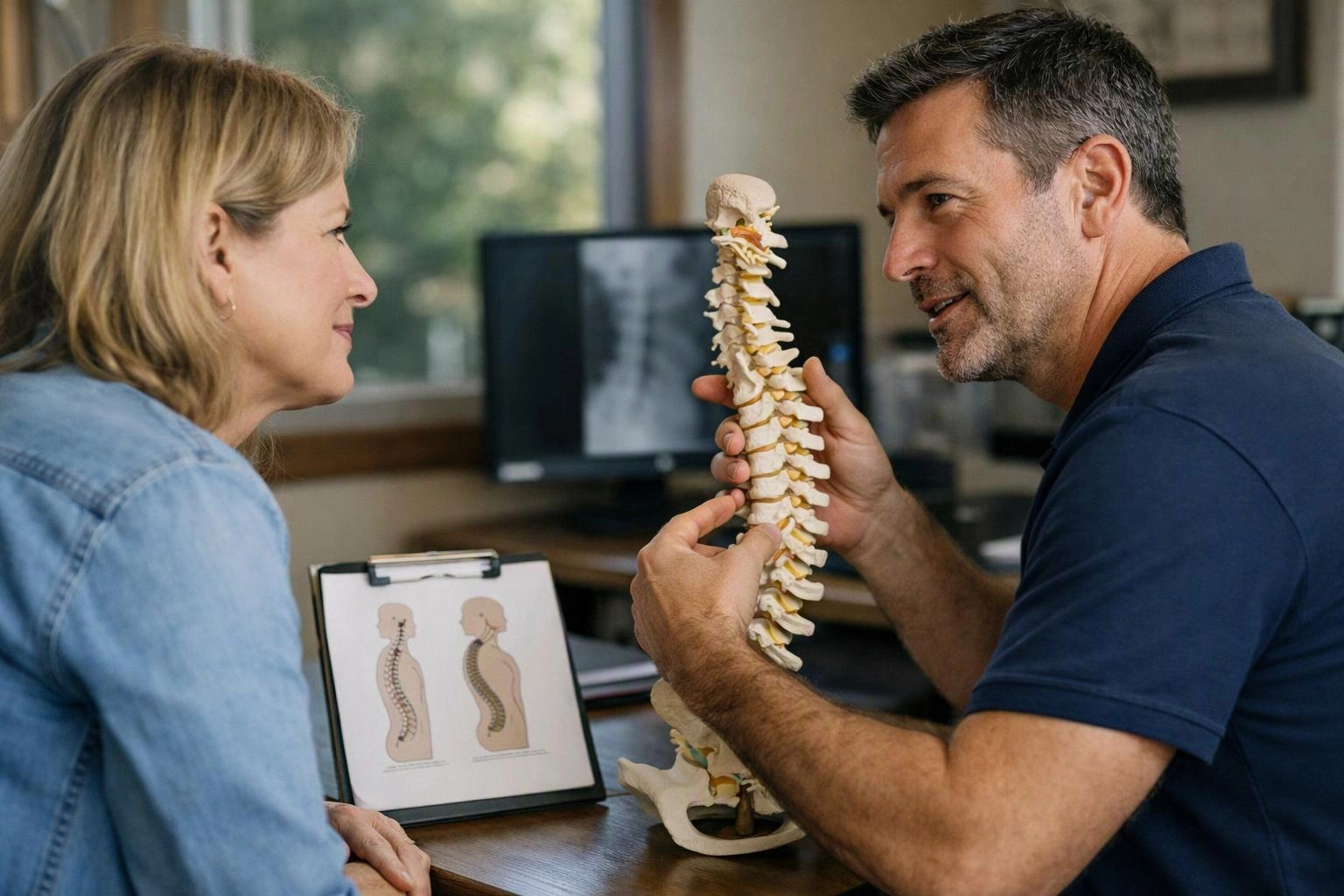
From the Advanced Injury Care Clinic team
When we assess kyphosis during Postural Correction, we observe spinal alignment during standing and movement. We also check shoulder position, thoracic mobility, and related muscle balance. Our team uses those findings to shape exercises and hands-on care around the person’s movement pattern, not the curve alone.
Kyphosis in Practice: A Real-World Example
A person who works at a desk may develop a rounded upper-back posture that becomes more visible after prolonged sitting. During Postural Correction, the clinician may assess thoracic mobility, shoulder position, and movement habits before selecting corrective exercises.
Related Services
Related Terms
Scoliosis
Scoliosis is a condition in which the spine curves sideways and may also rotate, creating an…
Range of Motion
Range of Motion is the amount and direction a joint can move through its available path…
Core Stability
Core Stability is the coordinated control of muscles around the abdomen, pelvis, spine, and hips that…
Advanced Injury Care Clinic
Have Questions About Kyphosis?
Contact Advanced Injury Care Clinic for practical guidance on Kyphosis and related chiropractor work in Brentwood.