
What Is Core Stability?
Core Stability is the coordinated control of muscles around the abdomen, pelvis, spine, and hips that helps maintain trunk position during movement. It supports force transfer between the upper and lower body, improves control during physical tasks, and allows the spine to respond to changing loads without relying on one muscle group alone.
Quick Facts About Core Stability
Category
Movement control
Used for
Trunk support during activity
Common confusion
Not the same as abdominal size
Also called
Trunk Stability, Core control
Often discussed with
Corrective Exercise Therapy
Key Takeaways About Core Stability
- It depends on coordination, not maximum abdominal strength.
- Controlled breathing and movement can reveal trunk control.
- Core stability is not the same as visible abdominal definition.
How Core Stability Works
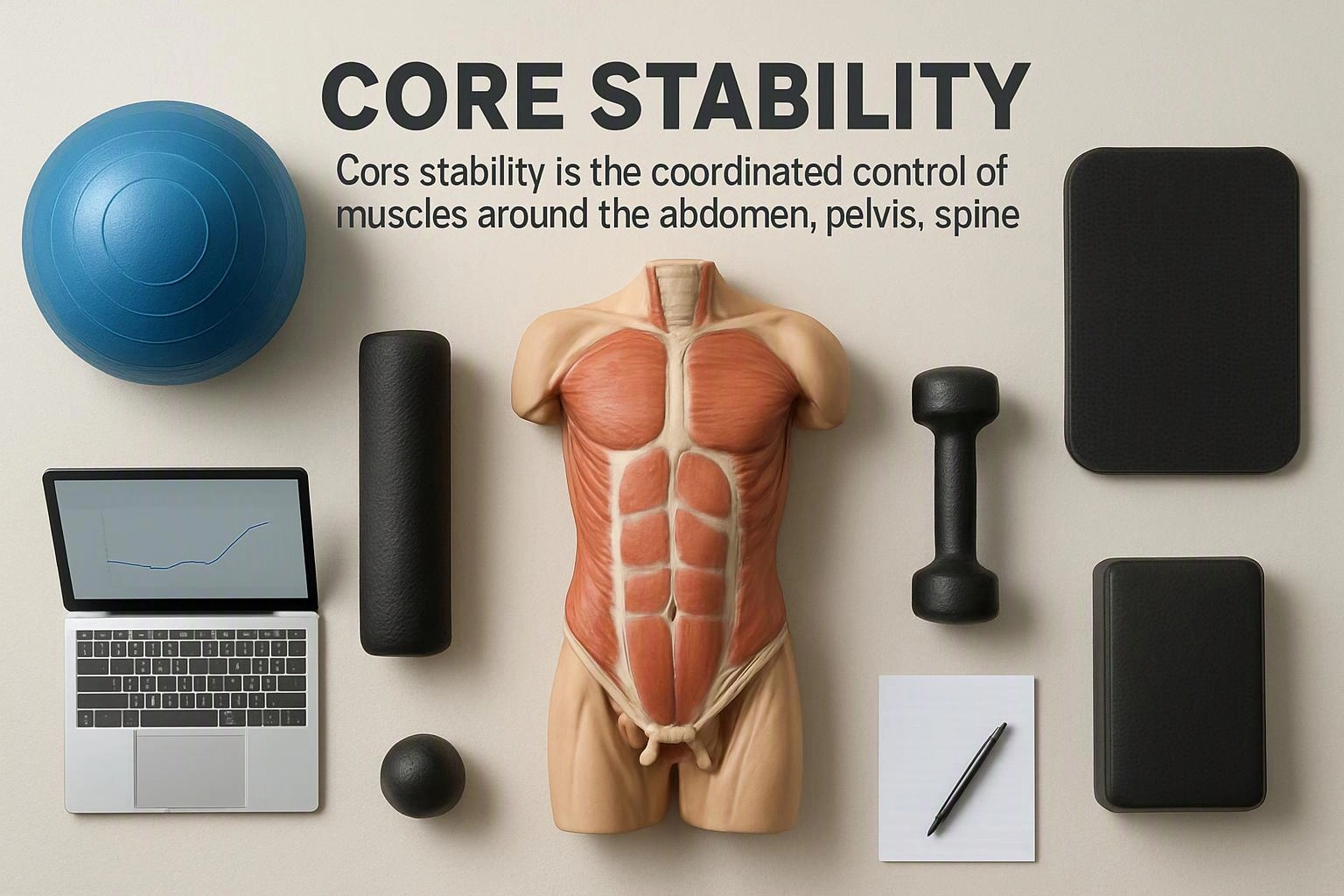
Core Stability works through coordinated activity among the deep and surface muscles that support the trunk. The diaphragm, abdominal muscles, back muscles, and pelvic muscles adjust their activity as your posture and movement change. This control helps keep the spine and pelvis aligned while the arms or legs produce force.
Related glossary terms: Lumbar Spine, Proprioception, Range of Motion.
Assessment focuses on movement quality, breathing, balance, and the ability to maintain a steady trunk during controlled tasks. Proprioception contributes by helping the nervous system sense body position. Corrective exercises may begin with simple bracing or limb movements, then progress toward tasks that resemble lifting, walking, reaching, or sport activity. The goal is consistent control across different positions and demands.
From the Advanced Injury Care Clinic team
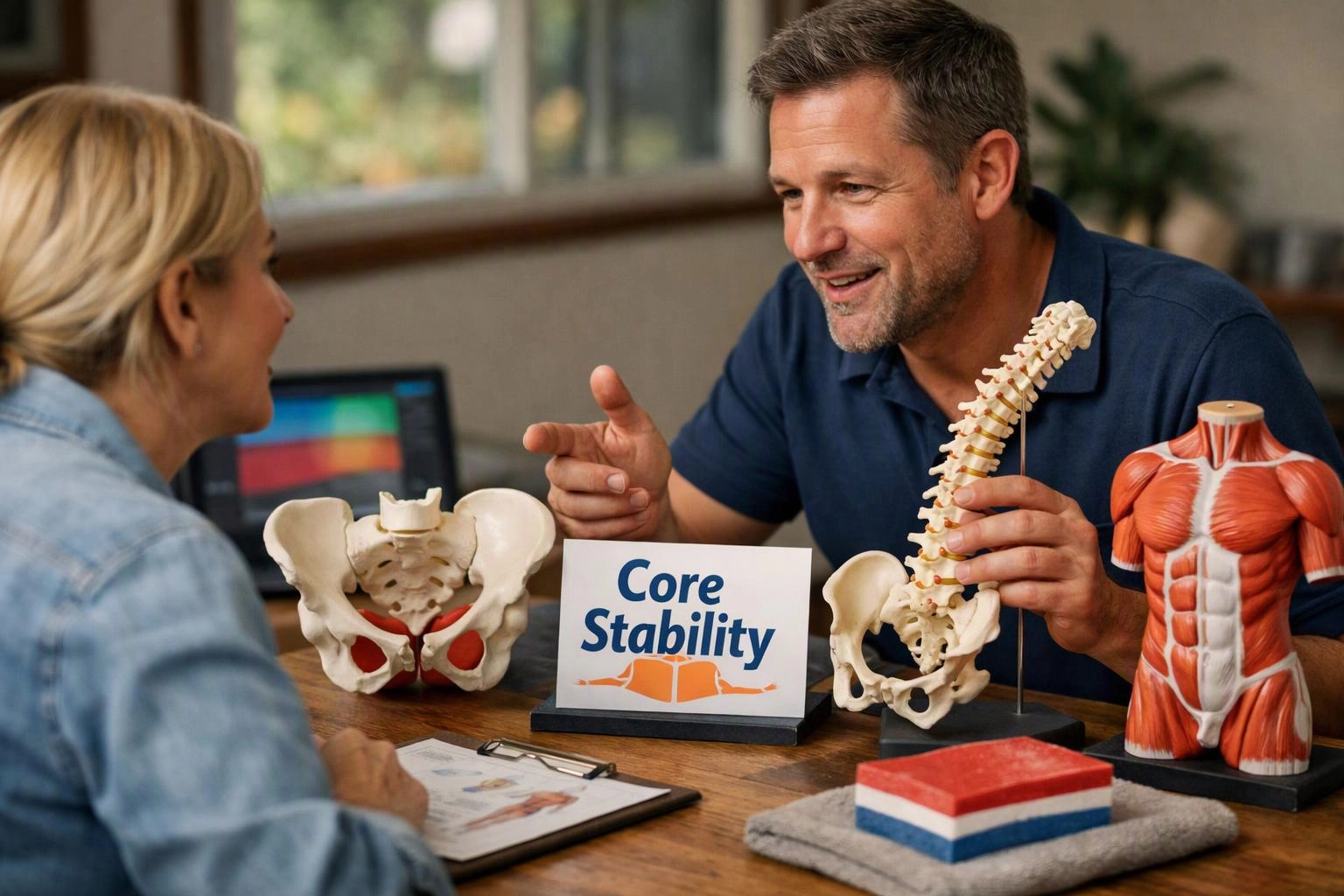
When we assess Core Stability, we watch how your trunk responds while your hips and shoulders move. Our team checks breathing, pelvic control, balance, and compensation patterns during Corrective Exercise Therapy. We adjust the exercise when another body region takes over the task.
Core Stability in Practice: A Real-World Example
A person returning to lifting after a back strain may practice keeping the pelvis steady while moving one arm. The exercise can progress toward a controlled squat or reach when trunk control remains consistent.
Related Services
Related Terms
Lumbar Spine
Lumbar Spine is the lower section of the vertebral column, located between the thoracic spine and…
Proprioception
Proprioception is the body’s ability to sense joint position, movement, and force without relying on vision…
Range of Motion
Range of Motion is the amount and direction a joint can move through its available path…
Hip Flexor
A Hip Flexor is a group of muscles at the front of the hip that helps…
Advanced Injury Care Clinic
Have Questions About Core Stability?
Contact Advanced Injury Care Clinic for practical guidance on Core Stability and related chiropractor work in Brentwood.