
What Is Range of Motion?
Range of Motion is the amount and direction a joint can move through its available path. Clinicians assess movement in active and passive forms, noting whether you move the joint yourself or another person guides it. The finding can describe a normal pattern, restriction, pain-limited movement, or excessive motion.
Quick Facts About Range of Motion
Category
Movement assessment
Used for
Tracking joint function
Common confusion
Joint movement is not the same as muscle strength
Also called
ROM, Joint range of motion
Often discussed with
Physical Therapy
Key Takeaways About Range of Motion
- Range of Motion describes joint movement, not muscle strength.
- Active and passive assessments provide different information.
- Flexibility and Range of Motion are related but not identical.
How Range of Motion Works
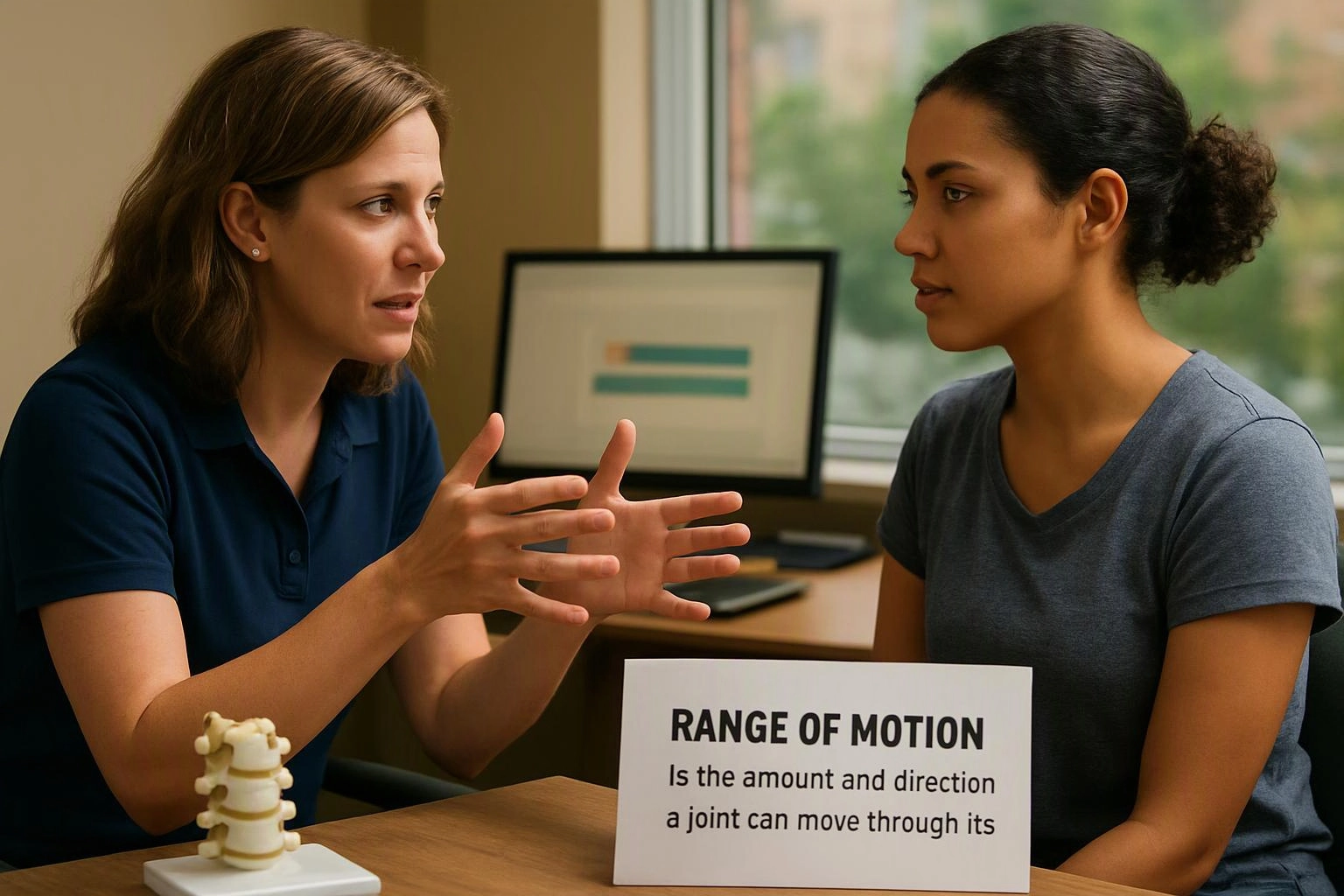
Range of Motion describes joint movement across a specific direction, such as bending, straightening, rotating, or moving a limb away from the body. A physical therapist may observe the movement and compare it with the person’s other side or earlier findings. Pain, stiffness, swelling, weakness, and joint structure can affect the result.
Related glossary terms: Joint Mobilization, Manual Therapy, Proprioception.
Active movement occurs when you control the joint with your own muscles. Passive movement occurs when a clinician guides the joint while your muscles remain relaxed. Physical Therapy assessments may record where discomfort begins, how smoothly the joint moves, and whether a restriction changes with guided movement. These details help separate a movement limit from a strength or coordination problem.
From the Advanced Injury Care Clinic team
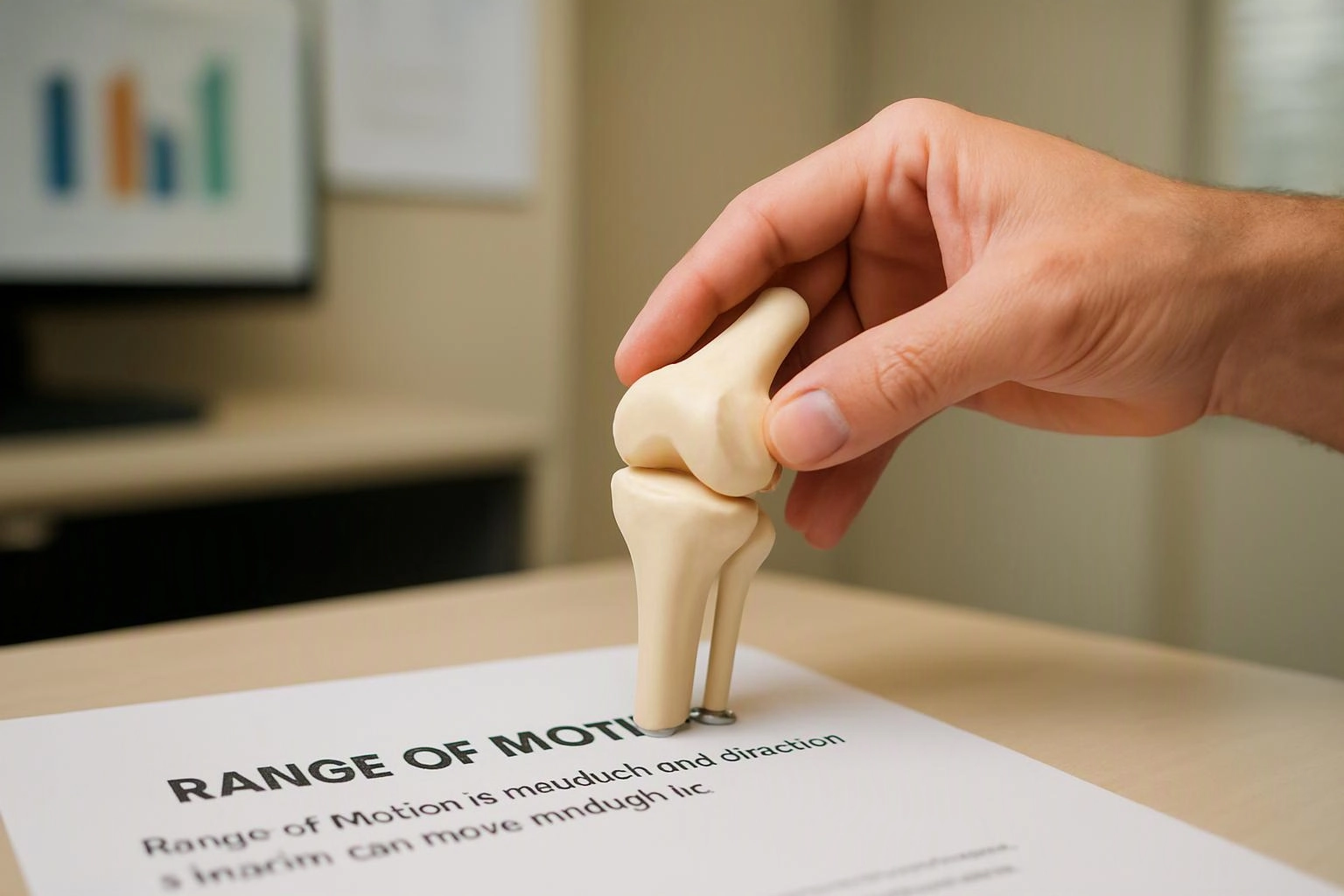
When we assess Range of Motion during Physical Therapy, we observe how a joint moves and ask about discomfort, stiffness, or changes in control. We compare active movement with guided movement when appropriate. Our team also considers nearby muscle function and movement quality so the finding fits the broader examination.
Range of Motion in Practice: A Real-World Example
A person recovering from a shoulder strain may raise one arm less smoothly than the other. During Physical Therapy, the clinician observes active and guided shoulder movement and records where discomfort or restriction appears.
Related Services
Related Terms
Joint Mobilization
Joint Mobilization is a hands-on physical therapy technique that applies controlled movement to a joint and…
Manual Therapy
Manual Therapy is a hands-on clinical approach that uses skilled movements, pressure, stretching, or joint techniques…
Proprioception
Proprioception is the body’s ability to sense joint position, movement, and force without relying on vision…
Strain
Strain is an injury to a muscle or tendon caused by overstretching or excessive force. A…
Advanced Injury Care Clinic
Have Questions About Range of Motion?
Contact Advanced Injury Care Clinic for practical guidance on Range of Motion and related chiropractor work in Brentwood.