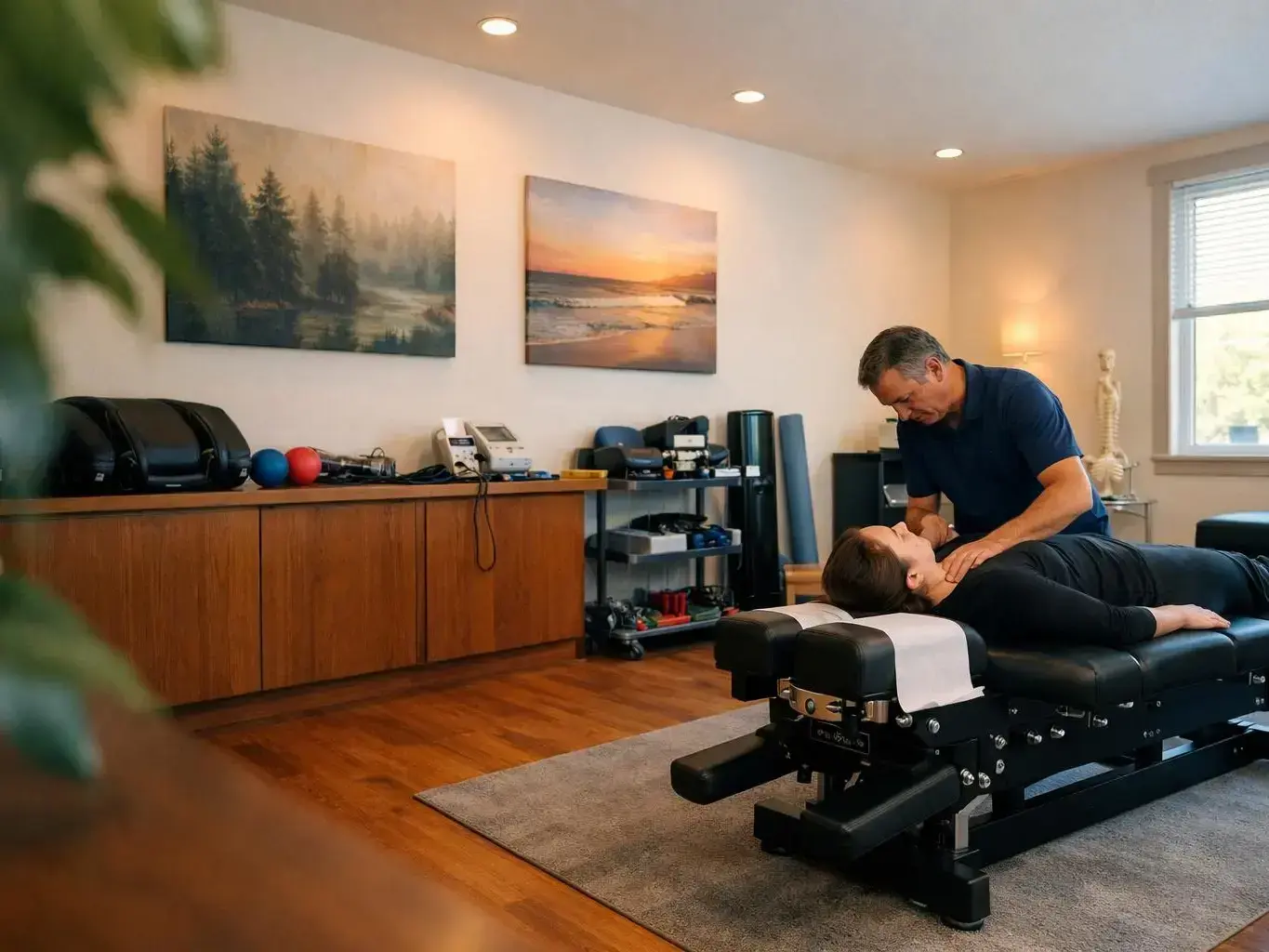
Understanding Flexion-Distraction
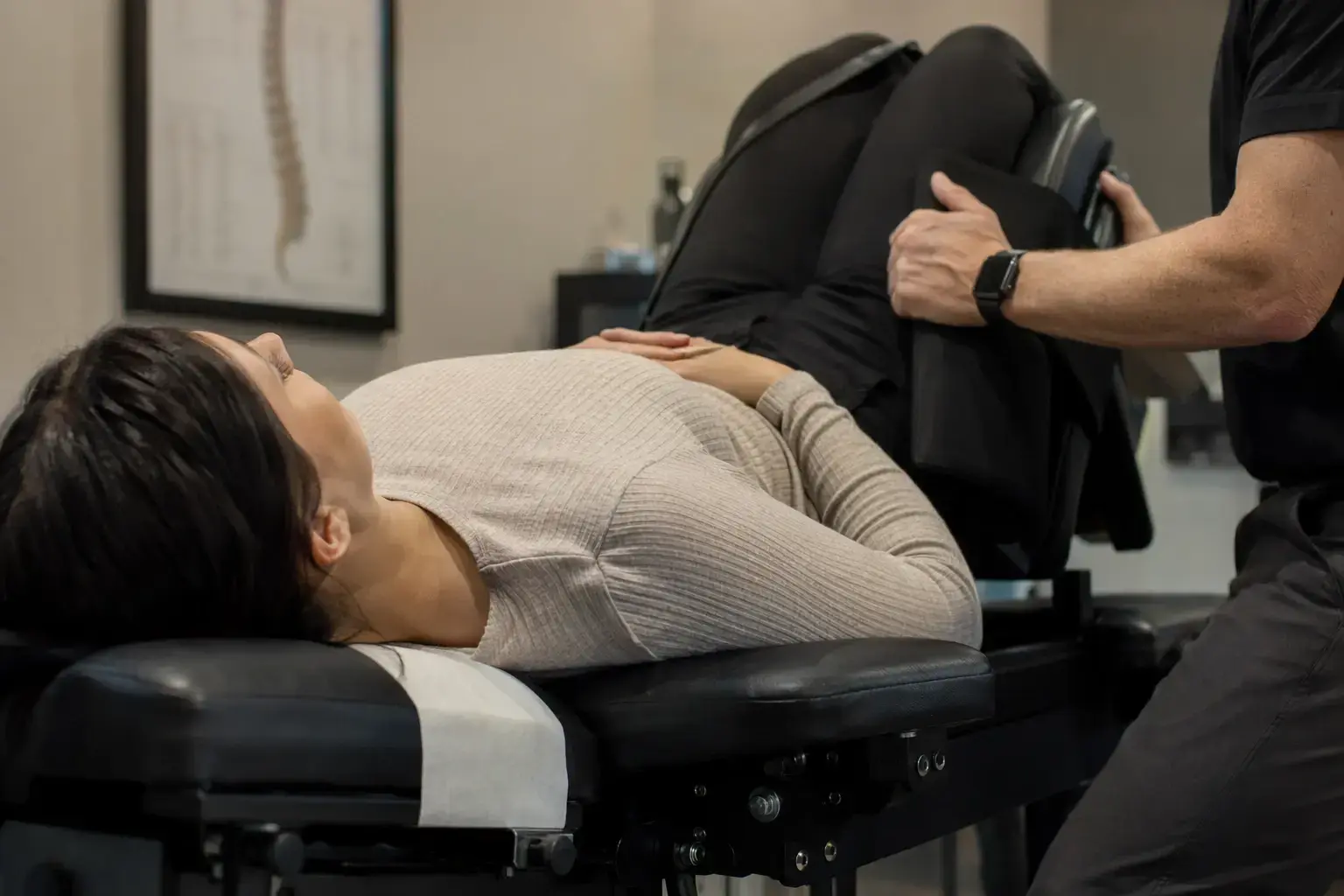
Flexion-Distraction is a chiropractic treatment method designed to address issues related to the spine, particularly those involving intervertebral discs. Unlike traditional spinal adjustments that use quick, forceful movements, Flexion-Distraction relies on slow, controlled stretching motions. These movements are performed using a specialized table that can be adjusted to target specific areas of the spine. The technique aims to decompress spinal discs, which can help relieve pressure on nerves and reduce pain.
Related glossary terms: Spinal Decompression, Disc Herniation, Chiropractic Adjustment.
The approach is based on the principle that gentle traction can create space between vertebrae, allowing herniated or bulging discs to retract. This process also encourages the flow of nutrients and oxygen into the discs, supporting natural healing. Because it's non-invasive and doesn't involve surgery or medication, Flexion-Distraction is often recommended for patients seeking conservative treatment options for back and neck pain.
How Flexion-Distraction Works?
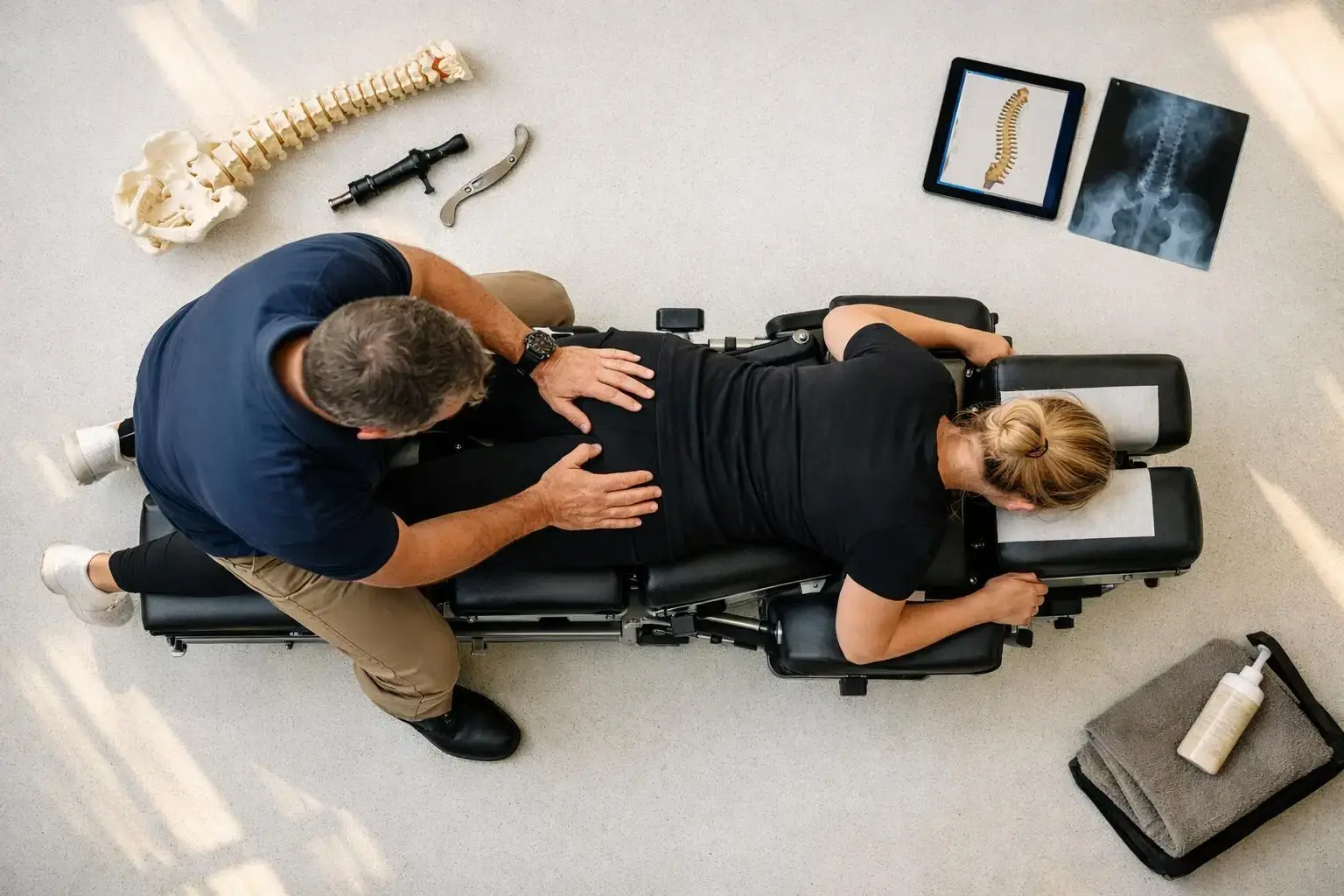
The Flexion-Distraction procedure begins with the patient lying face down on a specially designed chiropractic table. The table has sections that can move independently, allowing the chiropractor to isolate and stretch specific parts of the spine. The chiropractor uses their hands to apply gentle pressure to the affected area while the table moves in a rhythmic, pumping motion. This combination of manual pressure and table movement creates a distraction force, which stretches the spine and decompresses the discs.
During the treatment, the chiropractor may also incorporate flexion (bending) movements to target different angles of the spine. These motions help to mobilize the vertebrae and improve the range of motion in the affected area. A typical session lasts between 10 to 20 minutes. And patients may require multiple sessions depending on the severity of their condition. The technique is often painless. Though some patients may experience mild discomfort during the initial sessions as their body adjusts to the treatment.
Flexion-Distraction is frequently used alongside other chiropractic techniques, such as spinal adjustments or soft tissue therapy, to boost its effectiveness. For example, a chiropractor might use Flexion-Distraction to decompress a herniated disc and then follow up with exercises or stretches to strengthen the surrounding muscles. This integrated approach helps to address both the symptoms and the underlying causes of spinal issues.
Why Flexion-Distraction Matters?
Flexion-Distraction offers a non-surgical alternative for patients suffering from disc-related spinal conditions. Many people with herniated discs, sciatica. Or spinal stenosis experience significant pain and limited mobility, which can interfere with daily activities. Surgery. While effective, carries risks and often requires lengthy recovery times. Flexion-Distraction provides a conservative option that can reduce pain, improve function. And delay or eliminate the need for surgical intervention.
The technique is also valuable because it targets the root cause of disc-related pain rather than just masking symptoms. By decompressing the spine and promoting disc hydration, Flexion-Distraction helps to restore the natural spacing between vertebrae. This can alleviate pressure on nerves, reduce inflammation. And improve overall spinal health. For patients who are not candidates for surgery or prefer to avoid medication, Flexion-Distraction offers a safe and effective treatment path.
When Flexion-Distraction Matters Most?
Flexion-Distraction is particularly beneficial for individuals experiencing chronic back or neck pain due to disc issues. Common conditions treated with this technique include herniated discs, bulging discs, sciatica. And spinal stenosis. Patients who have not found relief from traditional chiropractic adjustments, physical therapy. Or medication may also benefit from Flexion-Distraction. The technique is especially useful for those who are seeking a non-invasive, drug-free approach to managing their pain.
This treatment is also valuable for patients recovering from injuries, such as car accidents or falls, that have caused disc damage. Because Flexion-Distraction is gentle and customizable, it can be custom to suit the needs of patients with varying levels of pain and mobility. For example, older adults or individuals with degenerative disc disease may find Flexion-Distraction to be a comfortable and effective option for managing their symptoms. And athletes or active individuals who want to maintain spinal health and prevent future injuries may incorporate Flexion-Distraction into their wellness routine.
In practice, In Brentwood, TN, where chiropractic care is often sought for work-related injuries, auto accidents. And sports injuries, Flexion-Distraction plays a key role in helping patients recover without surgery. Chiropractors in the area may use this technique to address the unique needs of local patients, including those involved in physically demanding jobs or recreational activities.