
Skip to content

Physical Therapy in Thompson's Station, Tennessee

How much balance work your recovery needs depends on movement control in Thompson's Station. We offer free consultations to discuss your goals.

Upfront, Transparent PricingServing 18 CommunitiesMon-Fri: 9 am–7 pm, Sat: 9 am–2 pm, Sun: ClosedFast Scheduling

Quick Summary: physical therapy in Thompson's Station, Tennessee

Physical Therapy in Thompson's Station is provided by Advanced Injury Care Clinic for movement limits linked to injuries, pain, weakness, and poor balance. Care may include therapeutic exercises, gait training, stretching routines, and strength work across Brentwood, Williamson County, and the greater Nashville area.

  • What we do: Advanced Injury Care Clinic provides Physical Therapy for movement limits in Thompson's Station, Tennessee.
  • What is included: Therapeutic exercises, gait training, stretching routines, strength training, and movement assessment.
  • What you get: Physical Therapy gives the patient a structured plan for moving more comfortably and using the body with better control.

Why does poor balance keep affecting my movement?

Poor balance can reflect weakness, pain, limited joint motion, or reduced body control. Physical Therapy checks these factors and uses guided exercises to improve movement safety.
Physical Therapy for movement and balance in Thompson's Station

This service fits people who struggle with walking, standing, reaching, or daily tasks after an injury. It also helps people who need better strength and movement control during recovery.

The key decision is whether guided exercise matches the problem. Our team assesses symptoms, joint motion, strength, and movement patterns before choosing exercises. A plan may include gait training, stretching routines, therapeutic exercises, or strength training.

Physical Therapy isn't the right answer for every symptom. Severe or unexplained symptoms may need medical assessment outside this service, and we explain that concern when it arises.

  • Identify the movement task that feels limited or unsafe.
  • Review pain, strength, joint motion, and walking patterns.
  • Choose exercises that match the patient's current ability.
  • Track movement changes during follow-up care.
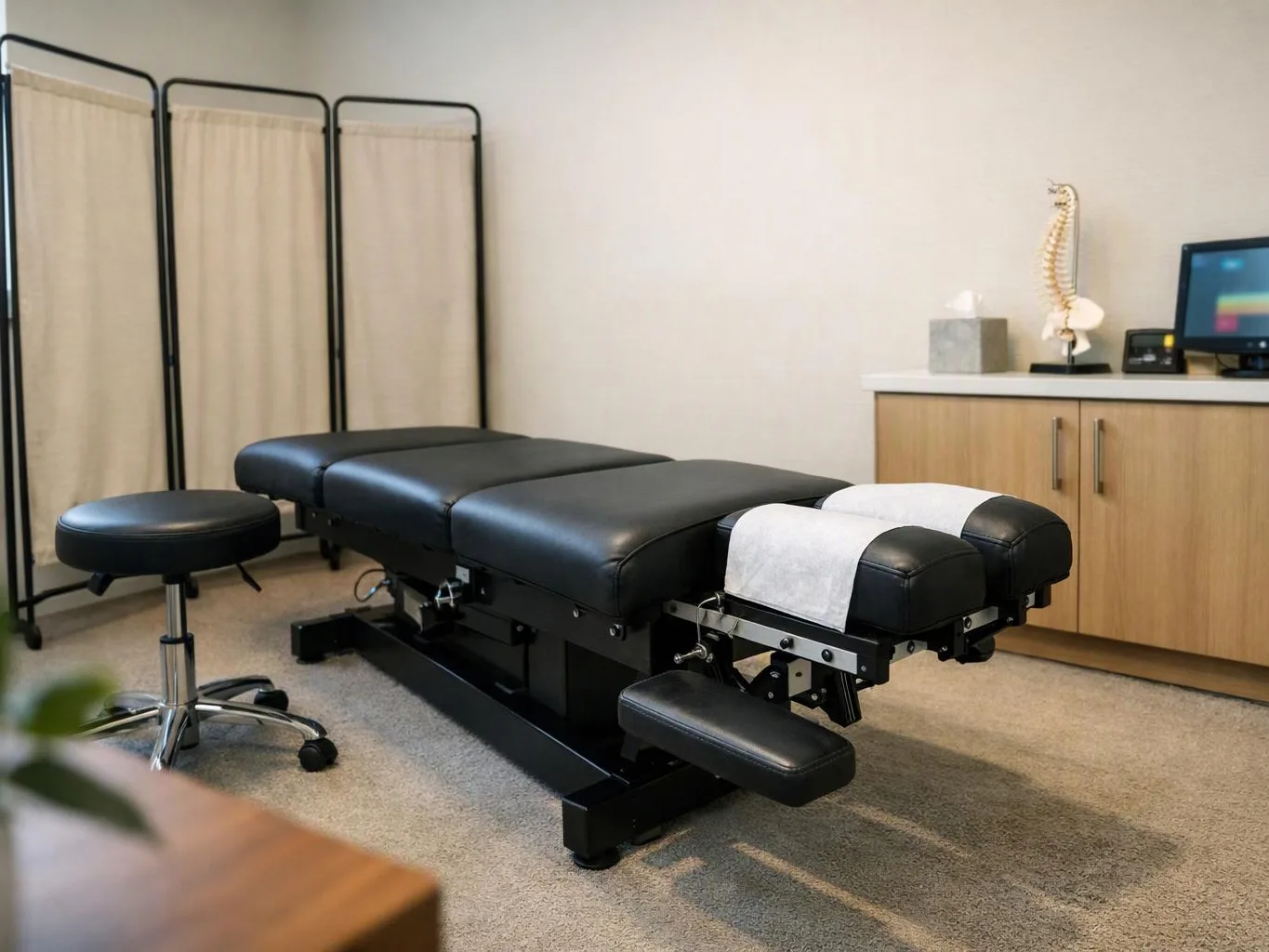
A black chiropractic table sits in a clean treatment room beside a stool, privacy screens, and a cabinet with a spine model

Service Overview

Physical Therapy is a movement-based health service that uses assessment, exercise, and hands-on care to improve function.

  • It differs from chiropractic adjustments because it focuses on movement practice, strength, flexibility, and task control.
  • We provide Physical Therapy for Thompson's Station patients and people throughout Williamson County and the greater Nashville area.

What physical therapy includes for movement recovery

Advanced Injury Care Clinic provides comprehensive Physical Therapy in Thompson's Station. Here's what you get:

  • A health history and movement assessment help define the main treatment needs.
  • Therapeutic exercises address strength, flexibility, and control.
  • Stretching routines target limited motion that affects daily tasks.
  • Gait training focuses on walking pattern, foot placement, and confidence.
  • Strength training builds support for joints used during work, sport, and home activities.
  • Follow-up care reviews progress and adjusts the treatment plan.

What movement-focused care can change

Guided exercises give you a clear way to practice movement between visits.

Strength work may make standing, walking, and daily tasks feel more manageable.

Gait training helps address walking patterns linked to pain or weakness.

Stretching can support joint motion when tightness limits normal activity.

A personalized plan keeps exercises connected to your recovery goals.

What patients receive from our movement care

Movement assessment before exercise

We check how strength, joint motion, pain, and coordination affect the task you want to improve. The wrong exercise choice can add strain, so assessment comes first.

Care matched to daily goals

Your plan may focus on walking, work tasks, sports movement, or home activity. We explain why each exercise belongs in the plan.

A clear limit for this service

Physical Therapy isn't a substitute for urgent medical care when symptoms are severe, sudden, or unexplained. We guide you toward the right next step when needed.

Process

How we plan and deliver movement care

1

Discuss the movement problem

We begin with your health history, symptoms, injury details, and main activity goal.

2

Assess strength and control

Our team checks joint motion, strength, walking pattern, balance, and the movements that cause trouble.

3

Build the treatment plan

We select therapeutic exercises, stretching routines, gait training, or strength work that fit your findings.

4

Practice and review progress

You practice the movements with guidance, and we review how the plan fits your recovery.

5

Discuss cost before treatment

Free consultations give you a chance to discuss your needs and available care before moving forward.

The Advanced Injury Care Clinic Standard

  • Thorough Assessments
  • Tailored Care Plans
  • Clear Explanations
  • Appropriate Techniques

Questions about movement-focused care

How can physical therapy improve movement?

Balance work can improve movement by training control, strength, and weight shifting during useful tasks. We first assess gait, joint motion, and weakness. The plan may then include therapeutic exercises, stretching routines, and strength training. Results vary because each person starts with different limits.

What should be ready before physical therapy starts?

Your main movement concern, injury history, symptom list, and activity goal help prepare for the first visit. Bring relevant medical records when available. Clear details about walking, standing, work, or sport help our team connect the assessment to daily life.

Which condition changes the time needed for movement care?

The condition that changes treatment time most is the level of movement loss found during assessment. Pain, weakness, limited joint motion, and poor gait control can each affect the plan. We review those findings before recommending exercises or follow-up care.

What should I ask before agreeing to physical therapy?

The treatment goal, planned exercises, home practice, progress checks, and signs to report are useful questions. Ask how the plan relates to your main activity. Our team explains the proposed care and its limits before treatment begins.

Which exercises may support walking after an injury?

Gait training, strength exercises, and stretching may support walking after an injury. The right mix depends on pain, joint motion, balance, and leg control. We assess those factors first, then show exercises that match the patient's current ability.

Why does stretching alone not fix weak movement?

Stretching can improve limited motion, but weakness and poor control need separate exercise work. A balanced plan may pair stretching routines with strength training and task practice. We choose the mix after checking how the body moves during the problem activity.

Who provides physical therapy in Thompson's Station?

Advanced Injury Care Clinic provides physical therapy in Thompson's Station and surrounding Williamson County communities. Our care may include therapeutic exercises, gait training, stretching routines, and strength work. We begin by discussing the injury, symptoms, and movement goal.
Contact

Discuss physical therapy in Thompson's Station

Advanced Injury Care Clinic starts with a consultation about your movement concern, injury history, and recovery goal. Request a free consultation to discuss a suitable path forward.

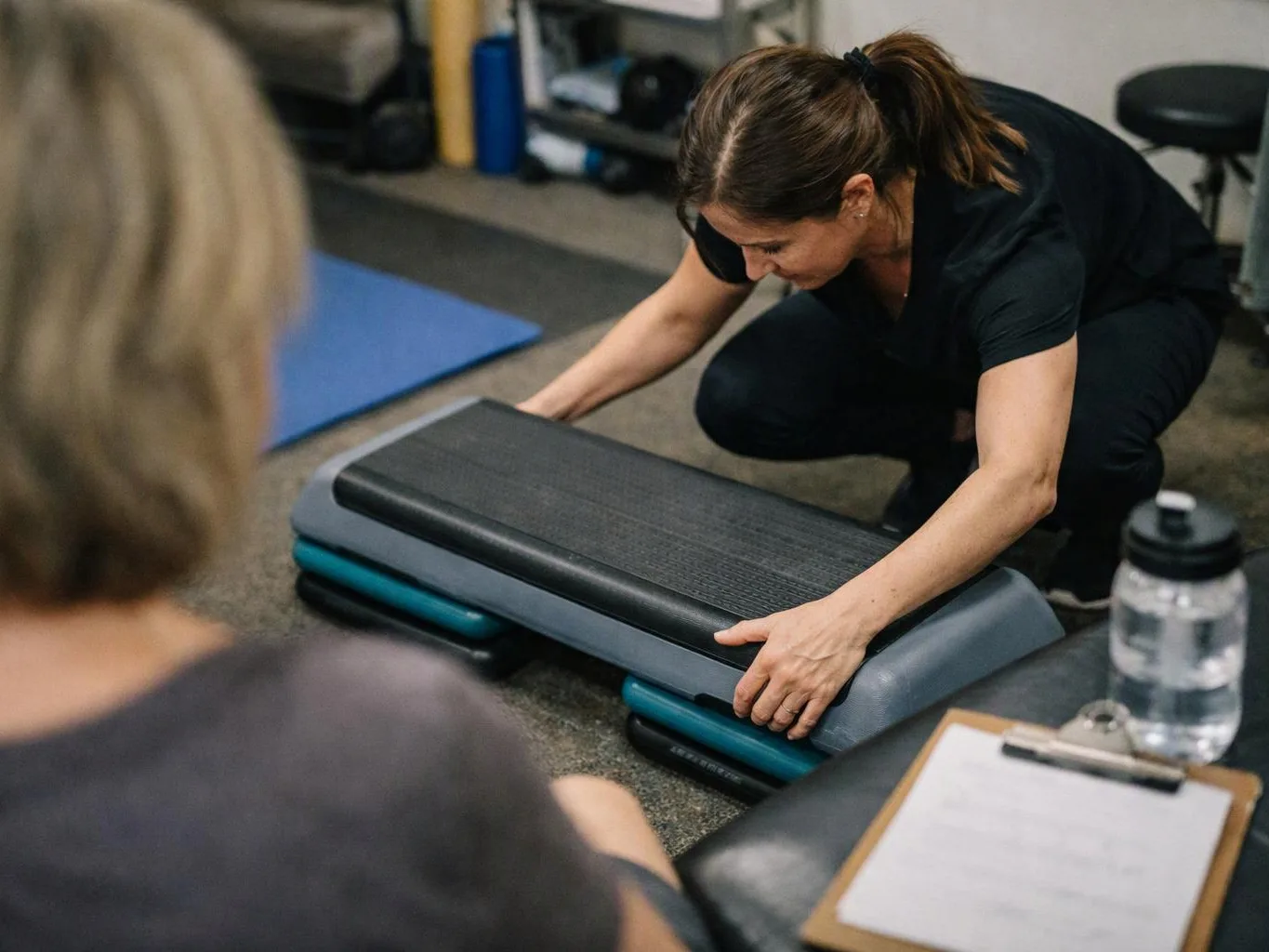
Woman crouches beside a step platform in a gym, adjusting it while another person sits nearby

The health and wellness information on this website is for general informational purposes only and is not medical advice. It does not create a provider-patient relationship. Always consult a qualified licensed provider in Brentwood, Tennessee, United States about your specific condition before making care decisions. Individual results vary.

(615) 265-0412