How Long Does Whiplash Recovery Take After a Car Accident?
Whiplash recovery does not follow one fixed timeline because symptoms, tissue injury, treatment needs, and response to care vary; Advanced Injury Care Clinic evaluates these factors and may use chiropractic adjustment, physical therapy, or massage therapy to support recovery.
Request an EstimateWhy Whiplash Recovery Does Not Follow One Fixed Timeline
Whiplash recovery varies because the neck injury, symptoms, and response to treatment differ from person to person. A car accident can strain neck muscles, ligaments, joints, and nerves around the cervical spine.
Some people develop neck pain, neck stiffness, headache, or restricted range of motion soon after a collision. Others notice delayed neck pain, shoulder pain, back pain, sleep difficulty, or other whiplash symptoms later. We use the symptom pattern and examination findings to shape a useful recovery timeline for each person.
What Changes the Course of Whiplash Recovery?
Whiplash recovery changes according to the injury findings, symptom pattern, daily limitations, and response to care. Our team reviews how symptoms affect movement, sleep, work, and normal activities.
| Recovery factor | Why it matters | What we assess |
|---|---|---|
| Injury severity | A greater soft-tissue injury may affect pain and movement more significantly. | Tenderness, muscle strain, ligament injury, and functional limitations. |
| Neck pain and stiffness | Pain and stiffness can limit daily activity and neck mobility. | Pain intensity, restricted movement, and muscle tension. |
| Headache | A post-traumatic headache may occur with neck strain or other accident-related symptoms. | Headache pattern and related symptoms such as dizziness. |
| Range of motion | Reduced movement can make work, driving, sleep, and self-care more difficult. | Neck movement and pain during movement. |
| Sleep disruption | Poor sleep can make pain and muscle tension harder to manage. | Sleep difficulty and positions that increase symptoms. |
| Treatment response | Changes after care help show whether the treatment plan fits the injury. | Symptom progression, movement, and function between visits. |
These findings help us adjust care when symptoms improve, remain unchanged, or become more limiting. Recovery depends on progress over time, not on a fixed calendar promise.
Which Factors Can Extend or Shorten Recovery?
Collision forces, prior conditions, symptom timing, and daily habits can all change the recovery period. We discuss these factors during the post-accident evaluation and connect them to practical care decisions.
We consider both symptoms and function when discussing activity changes. Returning to normal activities should follow improving movement and tolerance, not only a reduction in pain.
How We Evaluate Whiplash After a Car Accident
Advanced Injury Care Clinic evaluates the accident history, symptoms, movement, and functional limitations before deciding how chiropractic care may support recovery. Our team starts with a medical history and a physical examination.
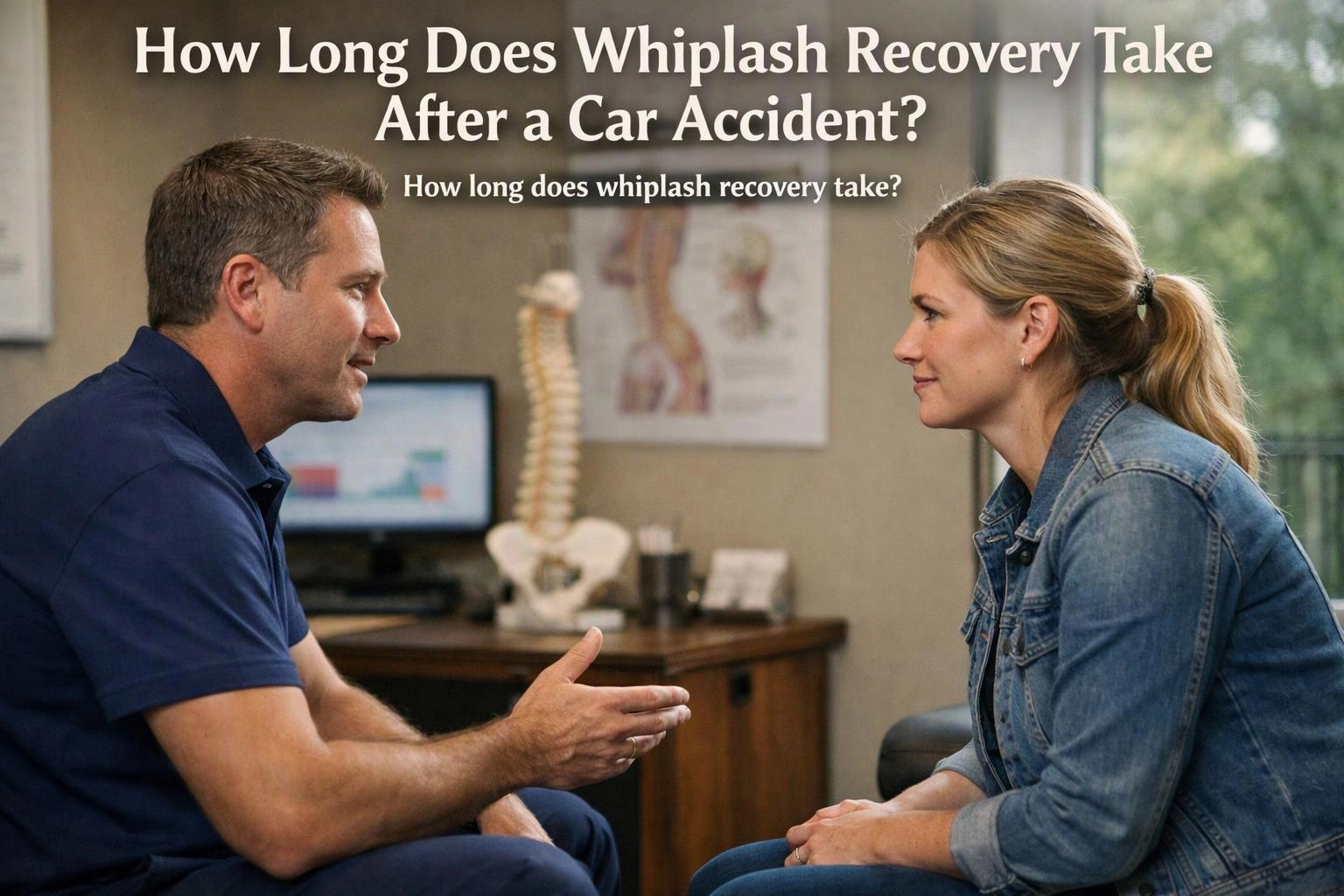
We review pain location, pain intensity, neck mobility, and range of motion. We also ask about headache, dizziness, numbness, weakness, sleep disruption, and other neurological symptoms.
The findings help us decide whether chiropractic care is appropriate and whether additional medical assessment is needed. We use this information to build a treatment plan that matches the injury pattern and current function.
How Chiropractic Care and Rehabilitation Support Recovery
Chiropractic adjustment, physical therapy, and massage therapy can address different parts of whiplash recovery when they fit the examination findings and treatment plan. We select care based on symptoms, movement, muscle tension, and functional needs.
A chiropractic adjustment may support joint movement and neck mobility when the examination shows restricted motion that is appropriate for this type of care. Physical therapy can focus on controlled movement, strength, posture, and rehabilitation.
Massage therapy may help address muscle tension and support pain management. We may combine these approaches with home exercises to support functional recovery and a gradual return to normal activities.
Our team explains what each part of care is intended to address and watches how symptoms respond. More information about our broader Auto Accident Injury Treatment approach can help you understand how accident-related injuries are evaluated.
When Whiplash Symptoms Need Further Medical Attention
Whiplash symptoms that worsen or include neurological changes require prompt medical assessment before routine chiropractic treatment continues. Worsening neck pain, numbness, weakness, severe headache, dizziness, vision changes, or concussion symptoms should be taken seriously.
We pause routine care when the symptoms suggest that further medical evaluation may be needed. Seek prompt medical attention for new or worsening neurological symptoms, severe pain, confusion, fainting, or changes in vision.
Share any change in symptoms with our team before the next visit. Clear symptom reporting helps us decide whether the current treatment plan remains appropriate.
What to Bring to a Whiplash Evaluation
Accident information and treatment records help us understand the injury pattern during a whiplash evaluation. Bring the details that show how symptoms began and how they have changed.
These materials do not replace an examination. They give our team useful context for selecting the next step.
How to Start a Whiplash Recovery Plan
A whiplash evaluation helps identify appropriate next steps, and Free Consultations are available for discussing whiplash treatment needs with Advanced Injury Care Clinic. We use the examination findings, symptom history, and functional limitations to guide care.
Our team can explain whether chiropractic care, physical therapy, massage therapy, or another medical referral fits the findings. The treatment plan can change as your symptoms and movement change.
Contact us to discuss your accident and arrange an evaluation.
Questions About Whiplash Recovery
Can whiplash symptoms appear after a car accident?
Yes, whiplash symptoms can appear after a car accident, and Advanced Injury Care Clinic evaluates delayed neck pain, stiffness, headache, and movement changes during a post-accident evaluation.
Can whiplash get worse before it gets better?
Yes, whiplash symptoms can become more noticeable as inflammation, muscle tension, or restricted movement develops after a collision. Worsening symptoms should be reported so we can reassess the treatment plan and identify whether medical attention is needed.
What should I avoid doing with whiplash?
You should avoid activities that sharply increase neck pain, dizziness, numbness, or weakness. We can help you choose safer activity changes while your range of motion and function improve.
Can chiropractic adjustments help whiplash recovery?
Yes, chiropractic adjustments may support whiplash recovery when the examination shows that this care is appropriate. We use examination findings to decide whether an adjustment belongs in the treatment plan.
When should I seek medical care for whiplash symptoms?
You should seek prompt medical care for worsening neck pain, numbness, weakness, severe headache, dizziness, vision changes, or concussion symptoms. These neurological symptoms may require medical assessment before routine chiropractic treatment continues.
Related Resources
Benefits of Chiropractic Adjustments for Back and Neck Pain
Why It MattersBenefits of Physical Therapy for Injury Recovery and Mobility
When You Need ItSigns You Need Chiropractic Care After a Car Accident
When You Need ItSports Injury Warning Signs That Mean You Should See a Chiropractor