Understanding Thompson Technique

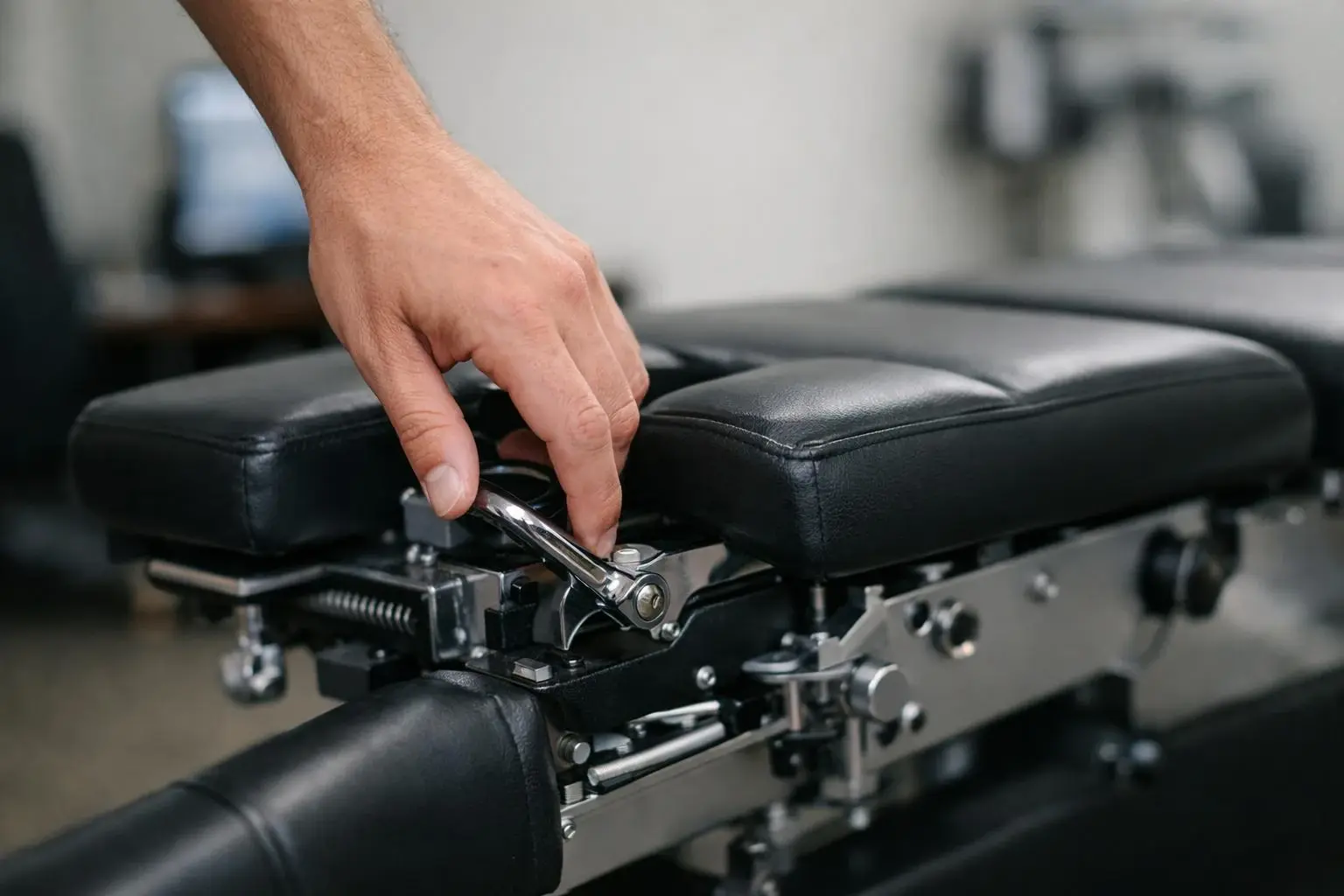
Thompson Technique is a chiropractic approach designed to improve spinal alignment and joint function. Unlike traditional manual adjustments that rely solely on the chiropractor’s hands, this method incorporates a specialized table with segmented drop pieces. These drop pieces move downward slightly during the adjustment, reducing the force needed to correct misalignments. The technique was developed by Dr. J. Clay Thompson in the 1950s and remains a widely used method in chiropractic care today.
Related glossary terms: Chiropractic Adjustment, Diversified Technique, Gonstead Technique.
The drop-table mechanism works by creating a brief, controlled drop in the table section beneath the area being adjusted. This drop occurs simultaneously with the chiropractor’s thrust, allowing the spine or joint to move more naturally. Patients often describe the experience as gentler than manual adjustments, which can involve more force. The technique is particularly useful for individuals who may be sensitive to traditional adjustments or have conditions that require a lighter touch.
How Thompson Technique Works?
The core of Thompson Technique lies in the combination of the chiropractor’s precise thrust and the table’s drop mechanism. The process begins with an assessment of the patient’s spine and joints to identify areas of misalignment or dysfunction. The chiropractor then positions the patient on the table, aligning the drop pieces with the targeted spinal segments. When the chiropractor applies a quick, controlled thrust to the area, the corresponding table section drops a short distance, assisting the adjustment.
In practice, The drop action enhances the effectiveness of the adjustment by allowing the spine to move more freely. This reduces the amount of force required from the chiropractor, making the technique less stressful on the patient’s body. The drop pieces are calibrated to drop at a specific resistance, ensuring consistency in each adjustment. This method is often used for adjustments in the cervical (neck), thoracic (mid-back). And lumbar (lower back) regions, as well as the sacroiliac joints.
Why Thompson Technique Matters?
Thompson Technique offers several advantages for patients seeking chiropractic care. First, the reduced force required for adjustments makes it a comfortable option for individuals who may be apprehensive about traditional manual adjustments. This includes patients with acute pain, children. Or those with conditions like osteoporosis, where excessive force could be harmful. The technique’s precision also allows chiropractors to target specific spinal segments without affecting surrounding areas, which can improve outcomes for conditions like disc herniations or joint dysfunction.
Another benefit of Thompson Technique is its efficiency. The drop-table mechanism allows chiropractors to perform adjustments quickly and consistently, which can be particularly useful in clinical settings where multiple patients are seen in a single day. The technique’s focus on patient comfort and safety has also contributed to its popularity among chiropractors and patients alike. By reducing the physical strain on both the patient and the chiropractor, Thompson Technique can be a sustainable option for long-term spinal care.
When Thompson Technique Matters Most?
Thompson Technique is particularly valuable in certain situations where traditional adjustments may not be ideal. For example, patients with acute injuries, such as whiplash from a car accident, often benefit from the gentler approach of this technique. The reduced force can help alleviate pain without exacerbating inflammation or muscle tension. Similarly, individuals with chronic conditions like osteoarthritis or spinal stenosis may find Thompson Technique more tolerable than manual adjustments, which can sometimes feel too intense.
The technique is also useful for patients who have had limited success with other chiropractic methods. Some individuals may not respond well to high-velocity, low-amplitude (HVLA) adjustments, which are common in techniques like Diversified Technique. Thompson Technique provides an alternative that can still achieve the desired spinal corrections while minimizing discomfort. And chiropractors may use this technique as part of a broader treatment plan that includes soft tissue therapy, exercises. Or lifestyle recommendations to support long-term spinal health.