
What Is Whiplash?
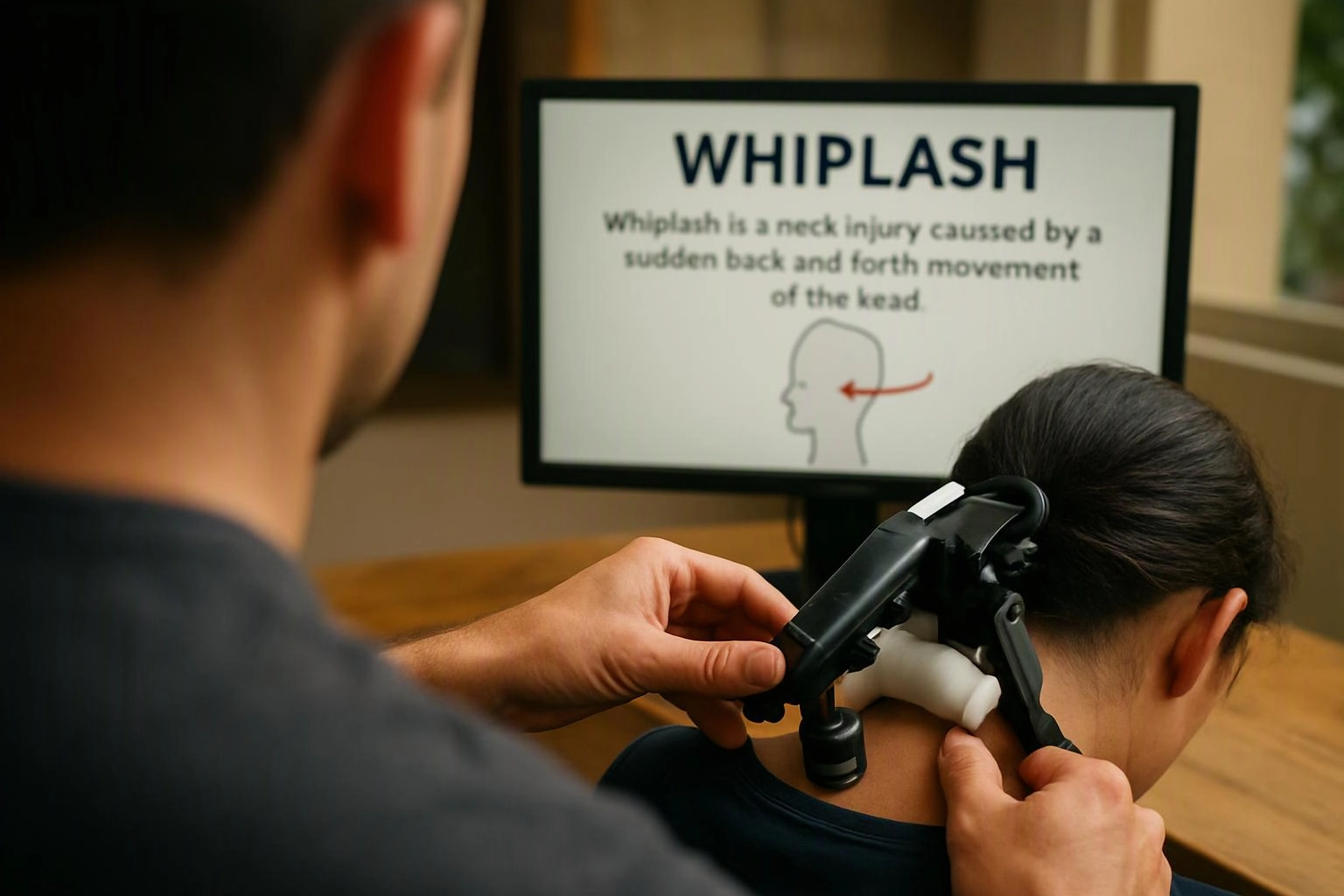
Whiplash is a neck injury caused by a sudden back-and-forth movement of the head and neck. The motion can strain muscles, ligaments, joints, and other soft tissues around the cervical spine. Whiplash often follows a rear-end vehicle collision, but similar forces can occur during other impacts or sudden movements.
Quick Facts About Whiplash
Category
Soft-tissue neck injury
Used for
Describing collision-related neck strain
Common confusion
Whiplash is not synonymous with a fracture
Also called
Neck Sprain, Neck strain
Often discussed with
Auto Accident Injury Treatment, Chiropractic Rehabilitation
Key Takeaways About Whiplash
- Whiplash results from rapid neck movement, not from one specific type of collision.
- Neck stiffness and reduced movement often shape daily activities after an impact.
- Whiplash is not the same as a neck fracture or a disc injury.
How Whiplash Works

Whiplash begins when the head moves rapidly while the torso changes direction. The neck responds with quick bending and straightening, which can place stress on muscles, ligaments, joints, and nerves. The resulting symptoms may include soreness, stiffness, headaches, or limited neck movement.
Related glossary terms: Cervical Spine, Range of Motion, Sprain.
Clinicians assess whiplash through the person’s symptoms, injury history, physical findings, and movement patterns. A review of the cervical spine may include checking tenderness, muscle tension, reflexes, sensation, and range of motion. Imaging may be considered when findings suggest a structural injury. The term describes a mechanism and injury pattern, so the same label can involve different tissues in different people.
From the Advanced Injury Care Clinic team
When we assess Whiplash after an auto accident, we review the collision history, symptoms, neck movement, muscle tension, and neurological findings. Our team also considers how the injury affects ordinary tasks, such as turning the head while driving or working. That information helps guide documentation and care planning.
Whiplash in Practice: A Real-World Example
After a rear-end collision, a driver may develop neck stiffness, shoulder tension, and headaches during ordinary movement. An evaluation can connect those findings with the reported impact and identify whether other injuries require attention.
Related Terms
Cervical Spine
Cervical Spine is the upper section of the vertebral column that supports the head and protects…
Range of Motion
Range of Motion is the amount and direction a joint can move through its available path…
Sprain
Sprain is a ligament injury caused by a force that stretches or tears the tough bands…
Strain
Strain is an injury to a muscle or tendon caused by overstretching or excessive force. A…
Advanced Injury Care Clinic
Have Questions About Whiplash?
Contact Advanced Injury Care Clinic for practical guidance on Whiplash and related chiropractor work in Brentwood.