
What Is Torticollis?
Torticollis is a condition that causes the head to tilt toward one side while the chin turns in another direction. In infants, torticollis often relates to tightness or weakness in neck muscles. The condition can affect head movement, feeding posture, sleep positioning, and early motor development. Pediatric evaluation helps identify its pattern and contributing factors.
Quick Facts About Torticollis
Category
Pediatric neck movement condition
Used for
Describing uneven head and neck positioning
Common confusion
Ordinary neck soreness
Also called
Wry Neck
Often discussed with
Pediatric Chiropractic Care
Key Takeaways About Torticollis
- The head tilts one way while the chin turns another.
- Infant torticollis may affect feeding and early movement.
- Torticollis is not the same as ordinary neck soreness.
How Torticollis Works
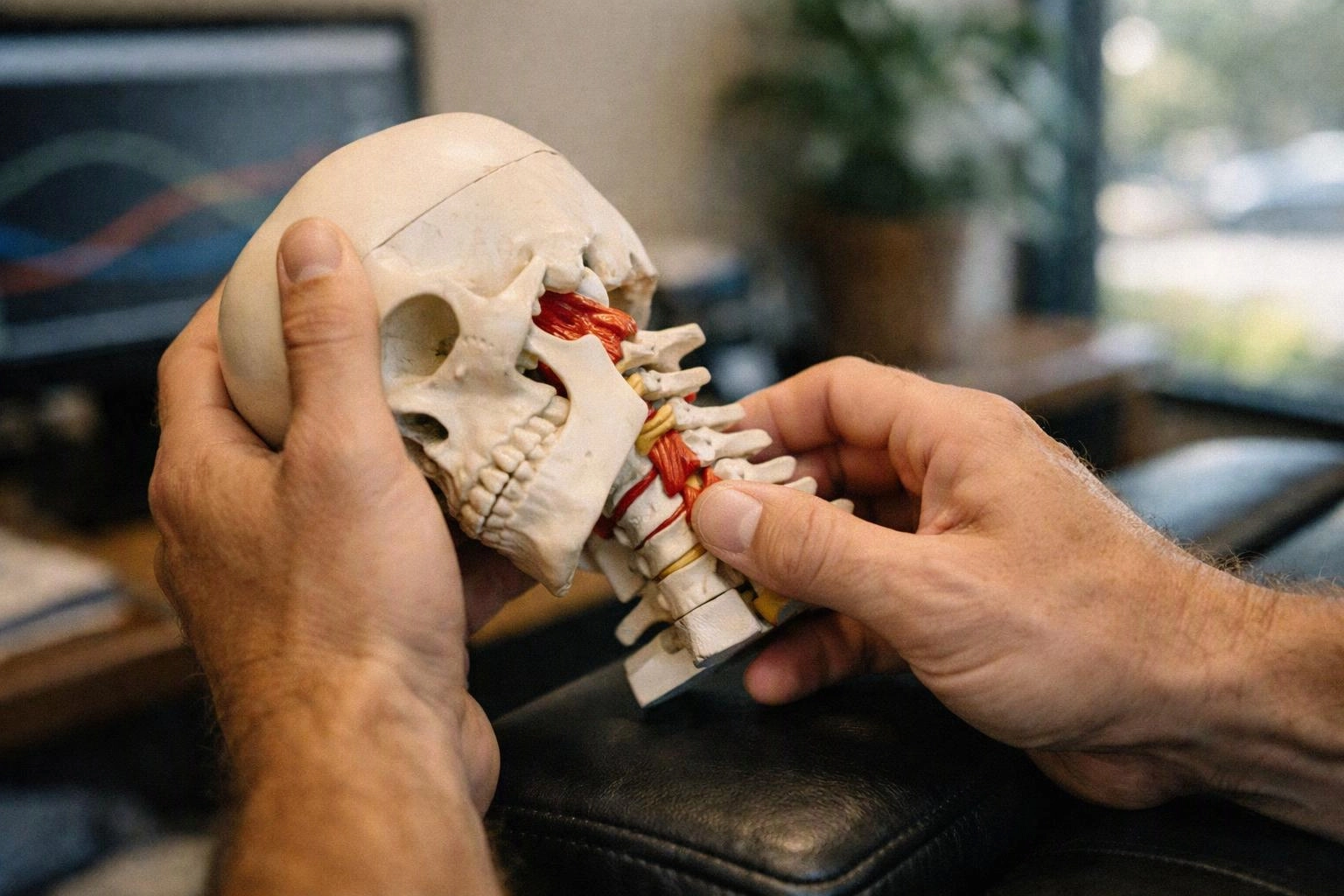
Torticollis changes head position when neck muscles do not share movement evenly. One side may remain shorter or more active, which limits comfortable rotation and creates a consistent tilt. In infants, the pattern may become noticeable during tummy time, feeding, or attempts to follow a face or toy.
Related glossary terms: Cervical Spine, Range of Motion, Proprioception.
A clinician looks at the direction of the head tilt, chin rotation, neck range of motion, and how the child moves both sides of the body. Range of Motion findings help describe the movement pattern, while observation of posture and motor skills adds context. Care may include gentle movement guidance, positioning changes, and support for balanced activity when appropriate.

From the Advanced Injury Care Clinic team
When we assess torticollis during Pediatric Chiropractic Care, we observe head position, neck movement, feeding posture, and age-appropriate motor patterns. We also look for movement differences that may affect how an infant turns, rests, or responds to visual cues. Our findings guide the next step in care or referral when needed.
Torticollis in Practice: A Real-World Example
An infant consistently tilts the head toward the right and turns the chin toward the left during feeding. During Pediatric Chiropractic Care, the team observes that pattern alongside neck movement and early motor activity.
Related Services
Related Terms
Cervical Spine
Cervical Spine is the upper section of the vertebral column that supports the head and protects…
Range of Motion
Range of Motion is the amount and direction a joint can move through its available path…
Proprioception
Proprioception is the body’s ability to sense joint position, movement, and force without relying on vision…
Strain
Strain is an injury to a muscle or tendon caused by overstretching or excessive force. A…
Advanced Injury Care Clinic
Have Questions About Torticollis?
Contact Advanced Injury Care Clinic for practical guidance on Torticollis and related chiropractor work in Brentwood.