Understanding Thoracic Spine

The thoracic spine is the longest part of the spine. It covers the upper and middle back.
It starts just below the neck. The neck is called the cervical spine. It ends above the lower back. The lower back is called the lumbar spine.
This part is important. It has 12 bones called vertebrae. Each one connects to a pair of ribs. Together, they form the rib cage.
This design does two things. It protects organs like the heart and lungs. It also gives a stable base for shoulders and arms.
The thoracic spine moves less than the neck or lower back. But it still lets you bend, twist. And breathe.
The thoracic spine does not herniate (bulge) as much as the neck or lower back. But it can get stiff. Poor posture can strain it.
Repeated motions or falls can cause problems here. They can misalign bones or tighten muscles. This can cause pain.
Many people feel dull aches or sharp pain between the shoulder blades. This pain often comes from the thoracic spine.
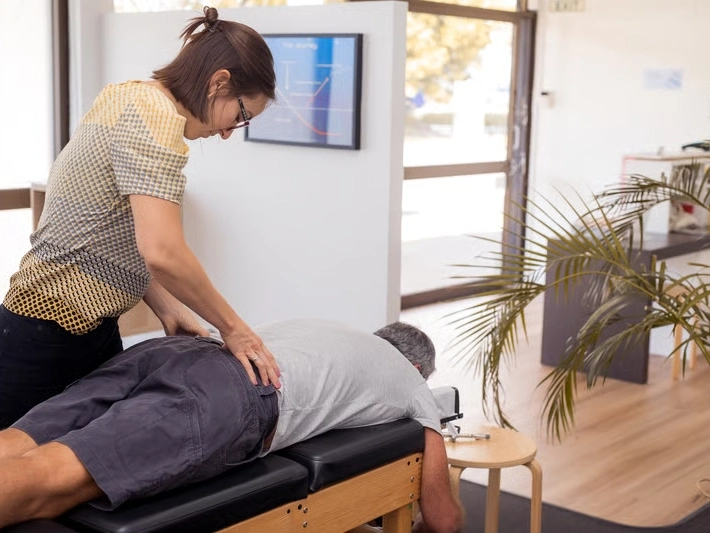
Chiropractors and physical therapists check this area. They help improve movement and ease pain.
How Thoracic Spine Works?
The thoracic spine balances strength and flexibility. Each bone has a ring. It protects the spinal cord.
Small joints called facets guide movement. Ribs attach to the bones through joints. These joints stop too much twisting or bending.
This stability helps with lifting, carrying. Or sitting. But stiffness can happen fast if posture is bad.
Nerves from the thoracic spine go to the chest and belly. They also go to organs inside.
Misaligned bones or tight muscles can irritate these nerves. This can cause rib pain or trouble breathing.
It can even cause stomach problems. Chiropractors use adjustments to fix this.
They also use stretches and exercises. These help restore movement and ease nerve pressure.
X-rays or MRI scans may be used. They check for problems like scoliosis (curved spine) or broken bones.
Why Thoracic Spine Matters?

A healthy thoracic spine helps posture and movement. Poor alignment can cause rounded shoulders.
It can also cause a forward head or chronic back pain. Over time, this can lead to headaches.
It can even cause neck or lower back pain. The body tries to make up for the imbalance.
Athletes need a flexible thoracic spine. It helps in sports like golf or swimming.
The thoracic spine also affects organs. Nerves here connect to them.
Irritated nerves in the upper spine can feel like heart problems. Mid-spine issues can affect digestion.
Fixing spine problems early helps. It prevents long-term issues and improves life.
When Thoracic Spine Matters Most?
Poor posture or sitting too long can hurt the thoracic spine. Office workers and drivers often feel this pain.
Slouching or hunching causes stiffness. Athletes can also hurt this area.
Sports with twisting can cause fractures or sprains. Older adults may feel more stiffness over time.
Some conditions affect the thoracic spine. Scoliosis is a curve in the spine. It often happens here.
Osteoporosis weakens bones. It can cause fractures in the thoracic spine.
Digestive or breathing problems can come from nerve issues here. Chiropractors can help spot these early.
Regular check-ups keep the spine healthy. They stop problems before they get worse.