
What Is Myofascial Release?
Myofascial Release is a hands-on massage technique that applies steady pressure and gentle movement to the fascia, the connective tissue surrounding muscles and other structures. The approach aims to reduce restrictions in tissue movement and support more comfortable motion. Practitioners may address a specific area or connected regions based on the person’s movement pattern and symptoms.
Quick Facts About Myofascial Release
Category
Hands-on massage technique
Used for
Restricted tissue movement and muscle tightness
Common confusion
It is not identical to trigger point therapy
Also called
Myofascial Therapy, Fascial release
Often discussed with
Massage Therapy
Key Takeaways About Myofascial Release
- Fascia connects and surrounds muscles, organs, nerves, and other body structures.
- Practitioners adjust pressure and direction based on tissue response.
- Myofascial Release is not the same as a general relaxation massage.
How Myofascial Release Works
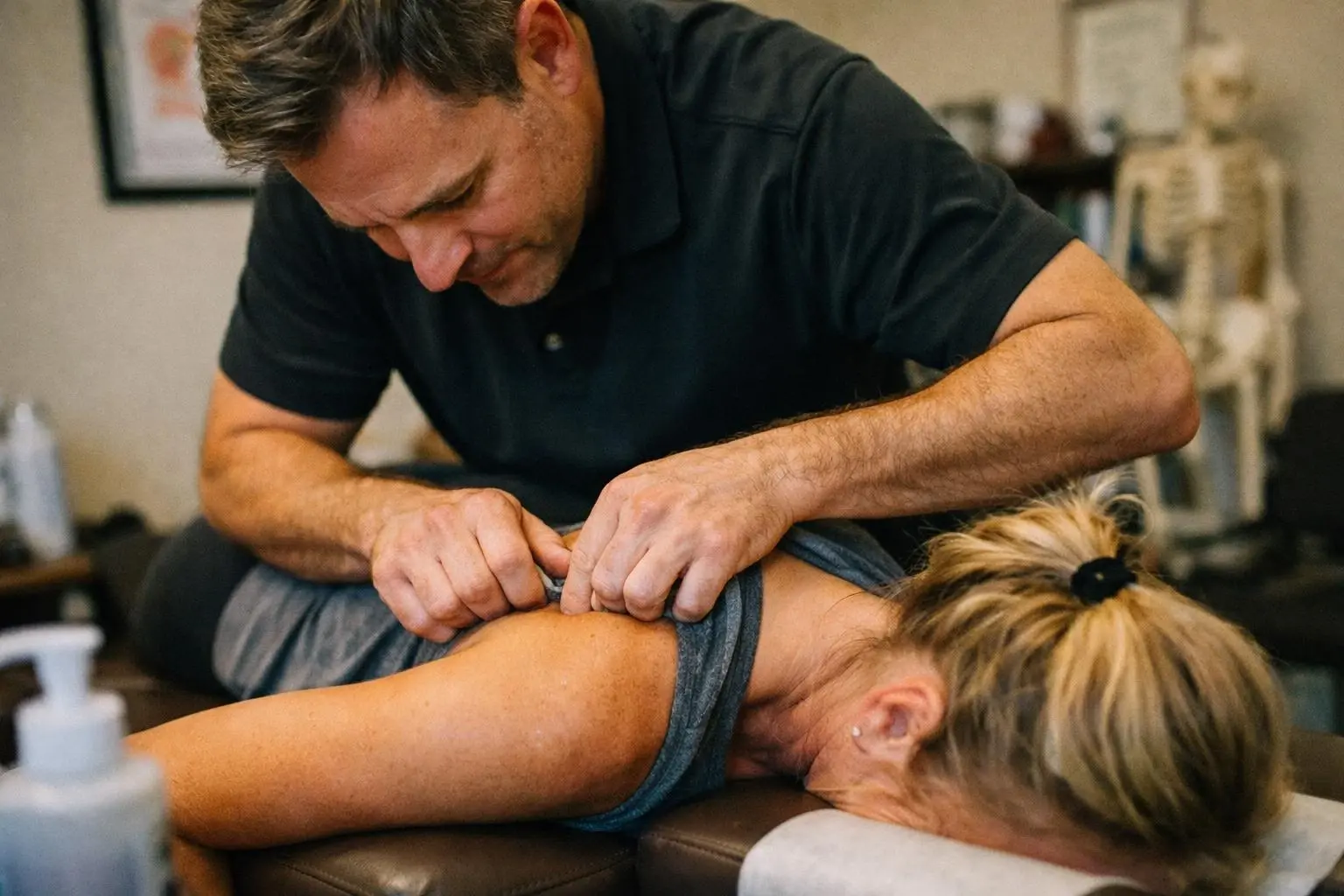
Myofascial Release uses sustained contact, controlled pressure, and slow movement to address areas where fascia and muscle do not move freely. The practitioner observes changes in tissue resistance and the person’s comfort during the technique. Pressure may remain in one area or follow a connected line of tissue.
Related glossary terms: Manual Therapy, Trigger Point, Range of Motion.
The method often focuses on movement quality, not only the location of discomfort. A practitioner may work around a shoulder, hip, or lower back when nearby tissue affects that region. Fascia connects body structures, so the treated area may not match the place where symptoms are felt. Myofascial Release may appear within Massage Therapy alongside other hands-on methods.
From the Advanced Injury Care Clinic team
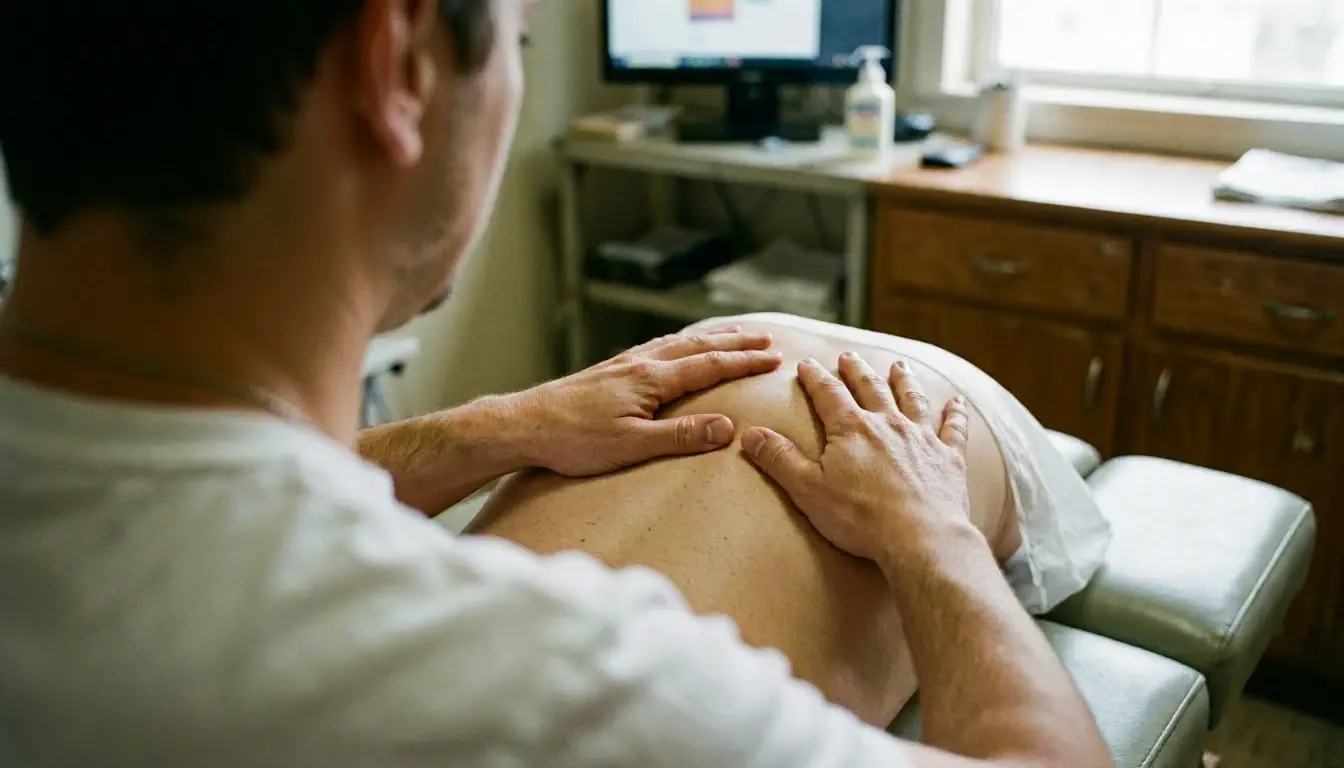
When we provide Myofascial Release through Massage Therapy, we begin by noting movement, tenderness, and tissue resistance. Our team adjusts hand pressure and direction during the session, then checks whether movement feels easier or more comfortable. We keep the technique focused on the person’s current presentation.
Myofascial Release in Practice: A Real-World Example
A person with tightness around the upper back may receive Myofascial Release along the upper back, shoulder, and chest area. The practitioner changes pressure and hand direction as the tissue response changes.
Related Services
Related Terms
Manual Therapy
Manual Therapy is a hands-on clinical approach that uses skilled movements, pressure, stretching, or joint techniques…
Trigger Point
A trigger point is a sensitive, irritable area within a taut band of muscle that may…
Range of Motion
Range of Motion is the amount and direction a joint can move through its available path…
Joint Mobilization
Joint Mobilization is a hands-on physical therapy technique that applies controlled movement to a joint and…
Advanced Injury Care Clinic
Have Questions About Myofascial Release?
Contact Advanced Injury Care Clinic for practical guidance on Myofascial Release and related chiropractor work in Brentwood.