
What Is a Herniated Disc?
A herniated disc is a spinal disc injury in which the disc’s inner material pushes through a weakened or damaged outer layer. The displaced material may irritate nearby nerves, causing pain, numbness, tingling, or weakness along the back, neck, arm, or leg, depending on the affected spinal region.
Quick Facts About Herniated Disc
Category
Spinal disc condition
Used for
Describing disc-related nerve irritation
Common confusion
Often confused with a bulging disc
Also called
Slipped Disc, Ruptured Disc
Often discussed with
Spinal Decompression Therapy
Key Takeaways About Herniated Disc
- Disc material extends through a weakened outer layer.
- Symptoms depend on the spinal region and nearby nerve involvement.
- A herniated disc is not the same as a bulging disc.
How Herniated Disc Works
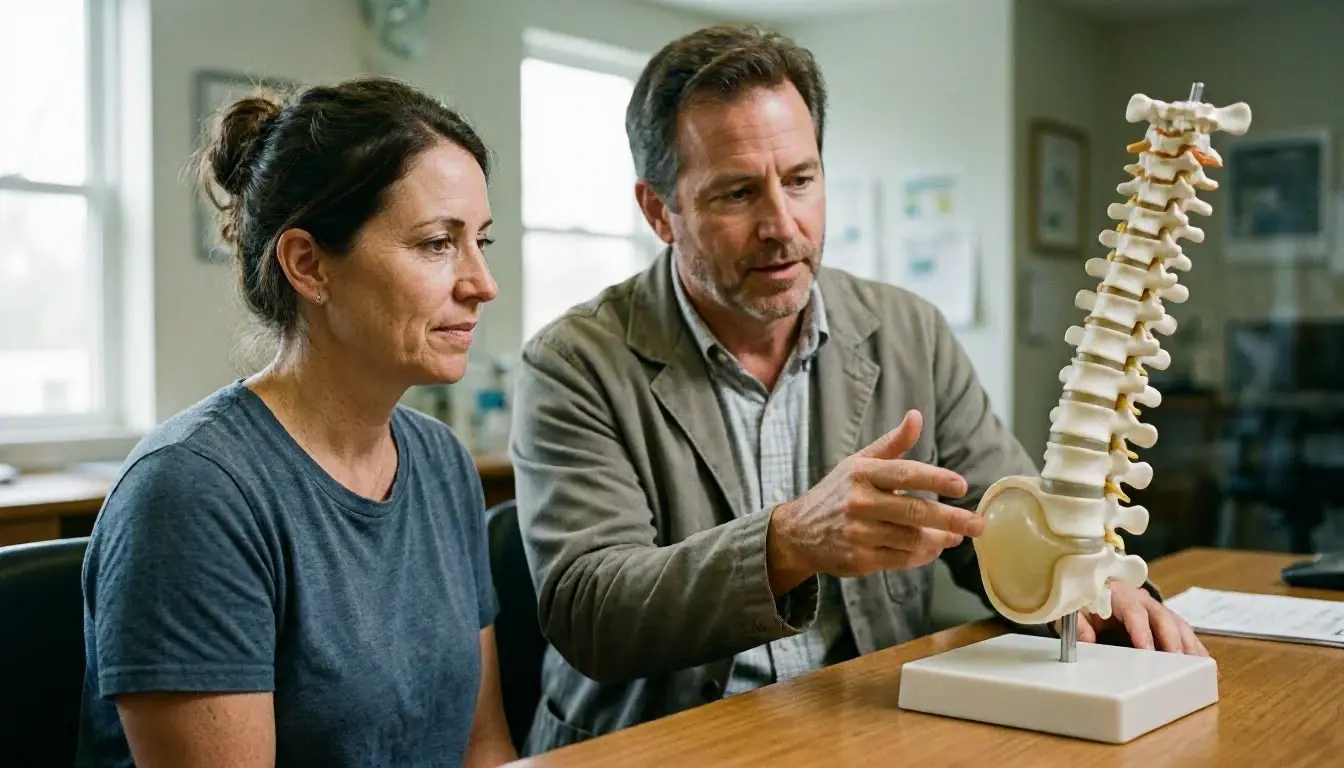
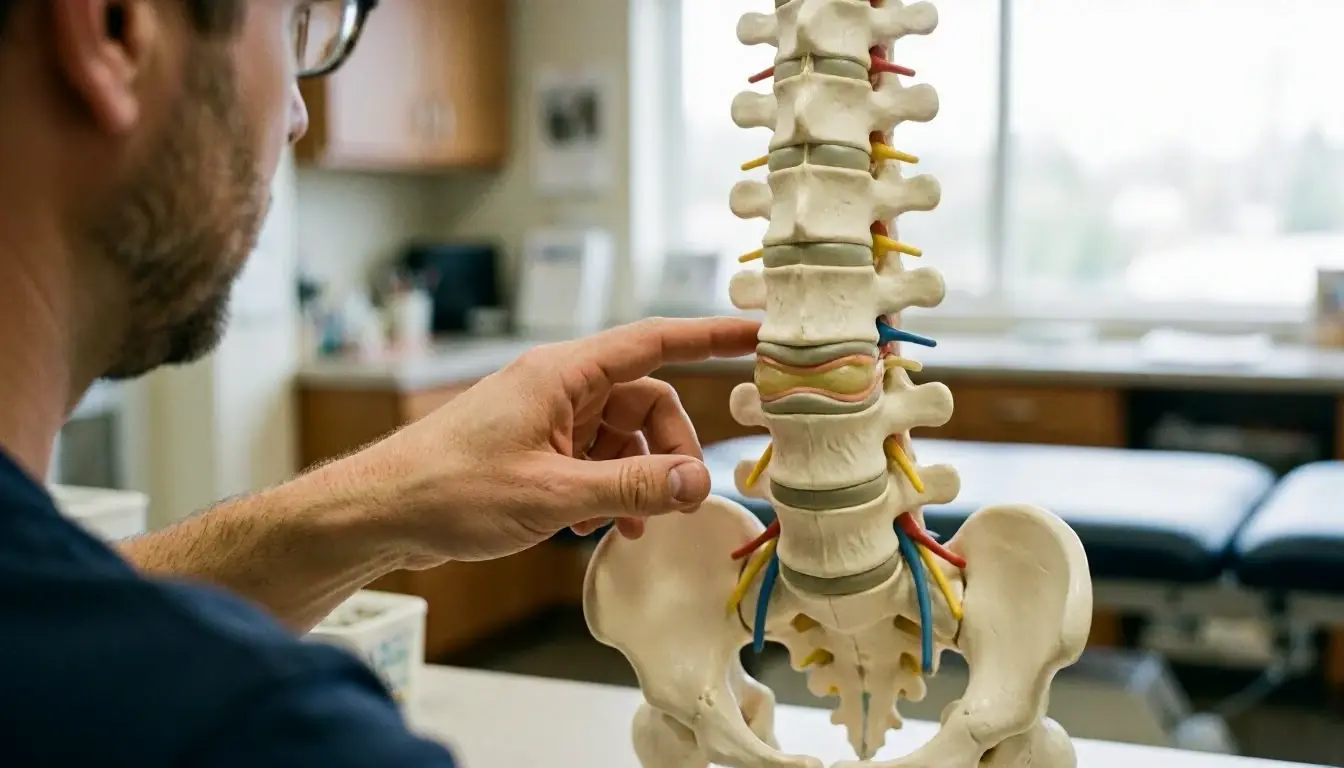
Herniated Disc describes a change in the structure of a spinal disc. Each disc has a softer inner portion and a tougher outer layer. A tear or weak area in the outer layer may allow the inner portion to extend outward. The location and direction of that extension affect nearby tissues.
Related glossary terms: Bulging Disc, Nerve Compression, Lumbar Spine.
Nerve irritation gives the condition practical meaning during assessment. A disc problem in the lower back may relate to symptoms traveling into the hip or leg, while a neck disc problem may relate to symptoms reaching the shoulder or arm. Nerve Compression describes pressure on nerve tissue, while Bulging Disc describes a broader outward extension of the disc wall. Spinal decompression therapy focuses on controlled spinal unloading as part of a care plan, with the approach guided by the person’s symptoms and examination findings.
From the Advanced Injury Care Clinic team
When we assess a herniated disc, we review the symptom pattern, spinal region, movement limits, and signs of nerve involvement. We use that information to determine whether Spinal Decompression Therapy fits the person’s overall care plan. Our team also considers findings from the examination before selecting appropriate treatment methods.
Herniated Disc in Practice: A Real-World Example
A person with a lower-back herniated disc may report back pain with tingling that travels into the leg. During Spinal Decompression Therapy, the care plan may focus on controlled unloading while the clinician tracks changes in symptoms and movement.
Related Services
Related Terms
Bulging Disc
A bulging disc is a spinal disc that extends beyond its usual boundary as its outer…
Nerve Compression
Nerve Compression is a condition in which pressure on a nerve disrupts normal nerve signaling. The…
Lumbar Spine
Lumbar Spine is the lower section of the vertebral column, located between the thoracic spine and…
Cervical Spine
Cervical Spine is the upper section of the vertebral column that supports the head and protects…
Advanced Injury Care Clinic
Have Questions About Herniated Disc?
Contact Advanced Injury Care Clinic for practical guidance on Herniated Disc and related chiropractor work in Brentwood.